Why sensory play makes sense
It seems so simple: kids love sensory play because it’s fun.
But in the background of playful kids are parents and educators who also love sensory play… not only for its fun factor, but also because it’s mindful, can be calming, and comes with a great big dollop of learning benefits as well.
Sensory play is the umbrella name for a whole swag of children’s play activities, specifically those that spark the senses… especially touch, sight and smell.
You might find that you’re offering sensory play at home without even knowing it… think playdough, potions, bubbly baths, sand pits and mud-pies.
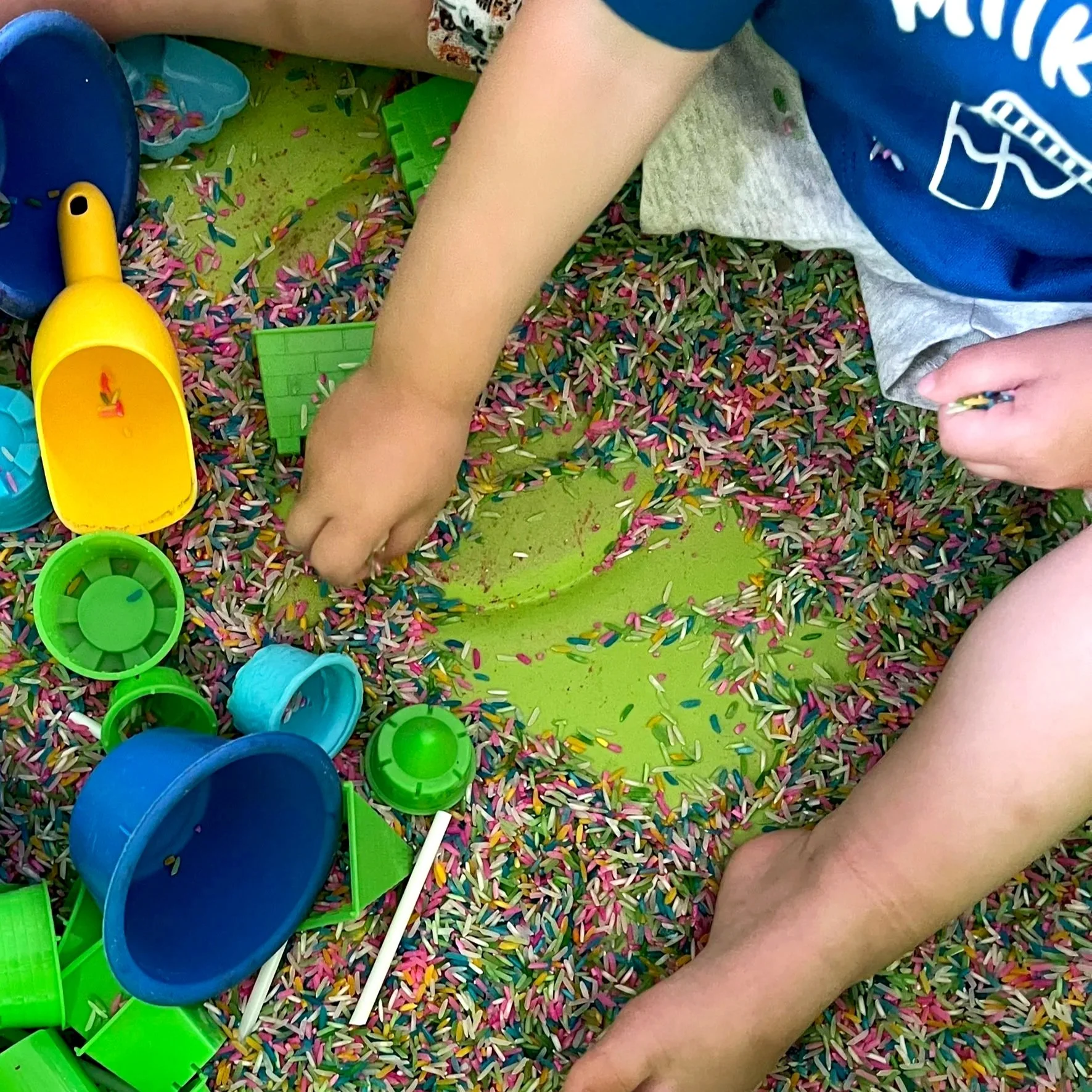
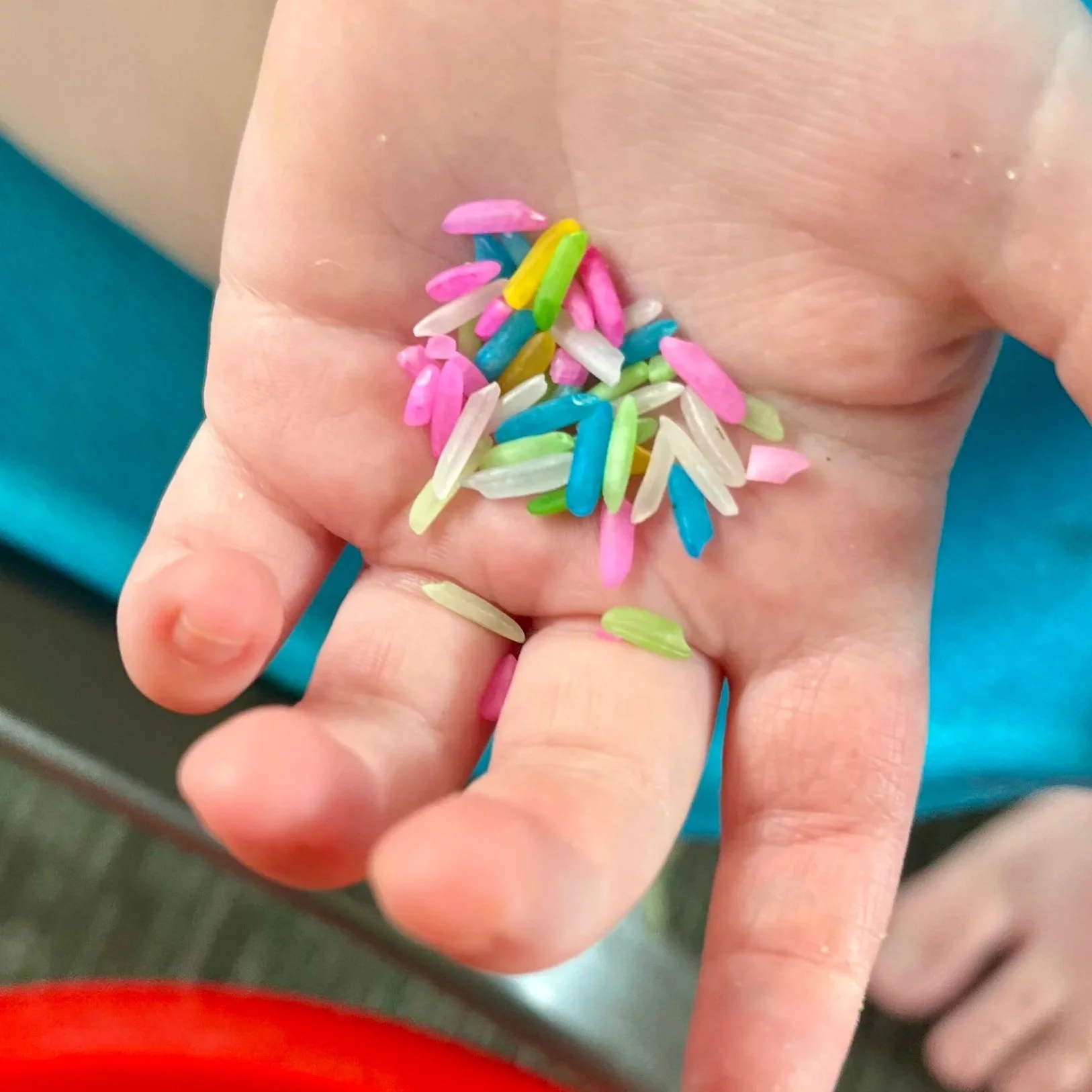
Another lovely and easy sensory play activity to try at home is Sensory Rainbow Rice. It’s cheap and easy to make from some very basic pantry items, but it always looks special and interesting.
Sensory Rainbow Rice
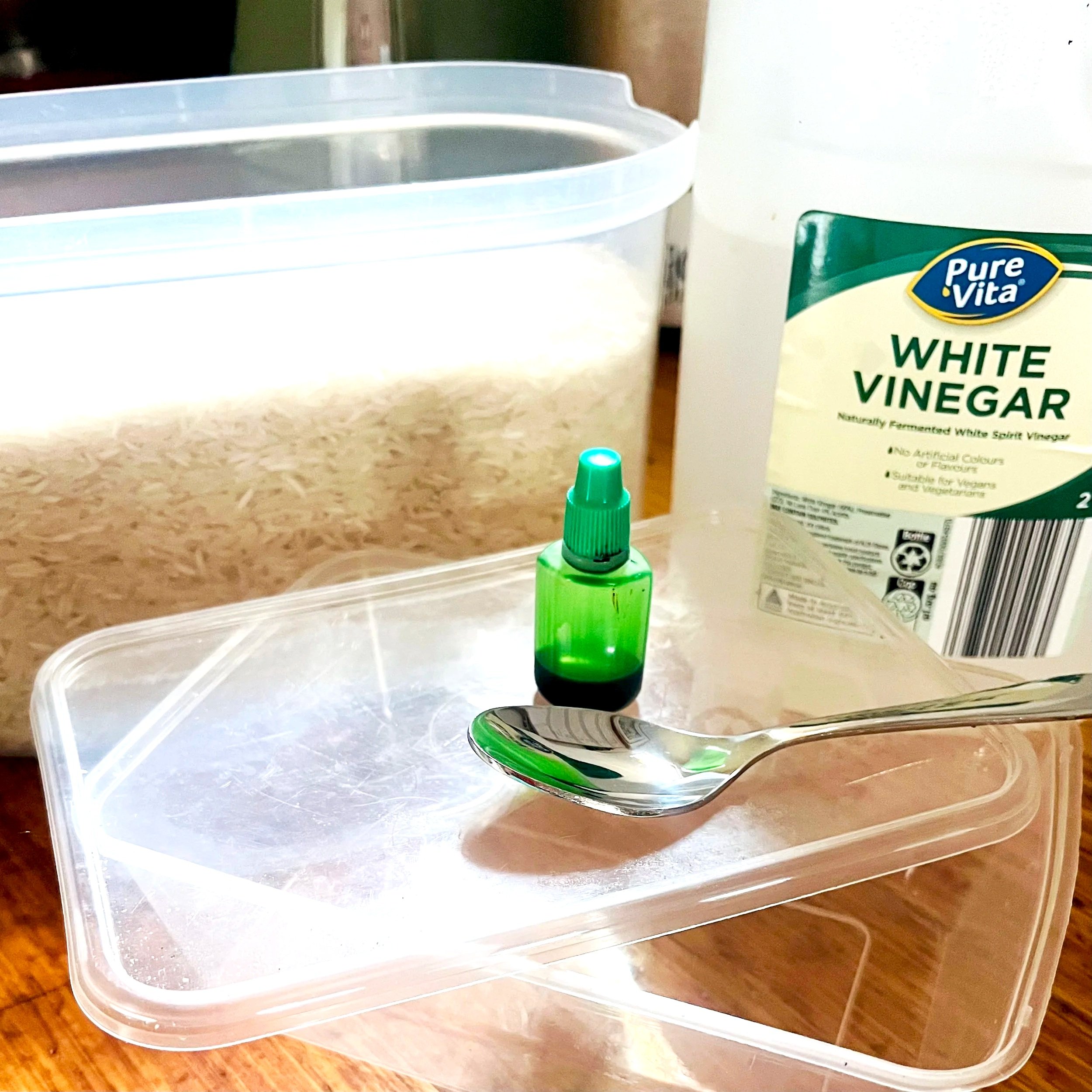
Pour a cup or two of uncooked rice into a container with a tight-fitting lid
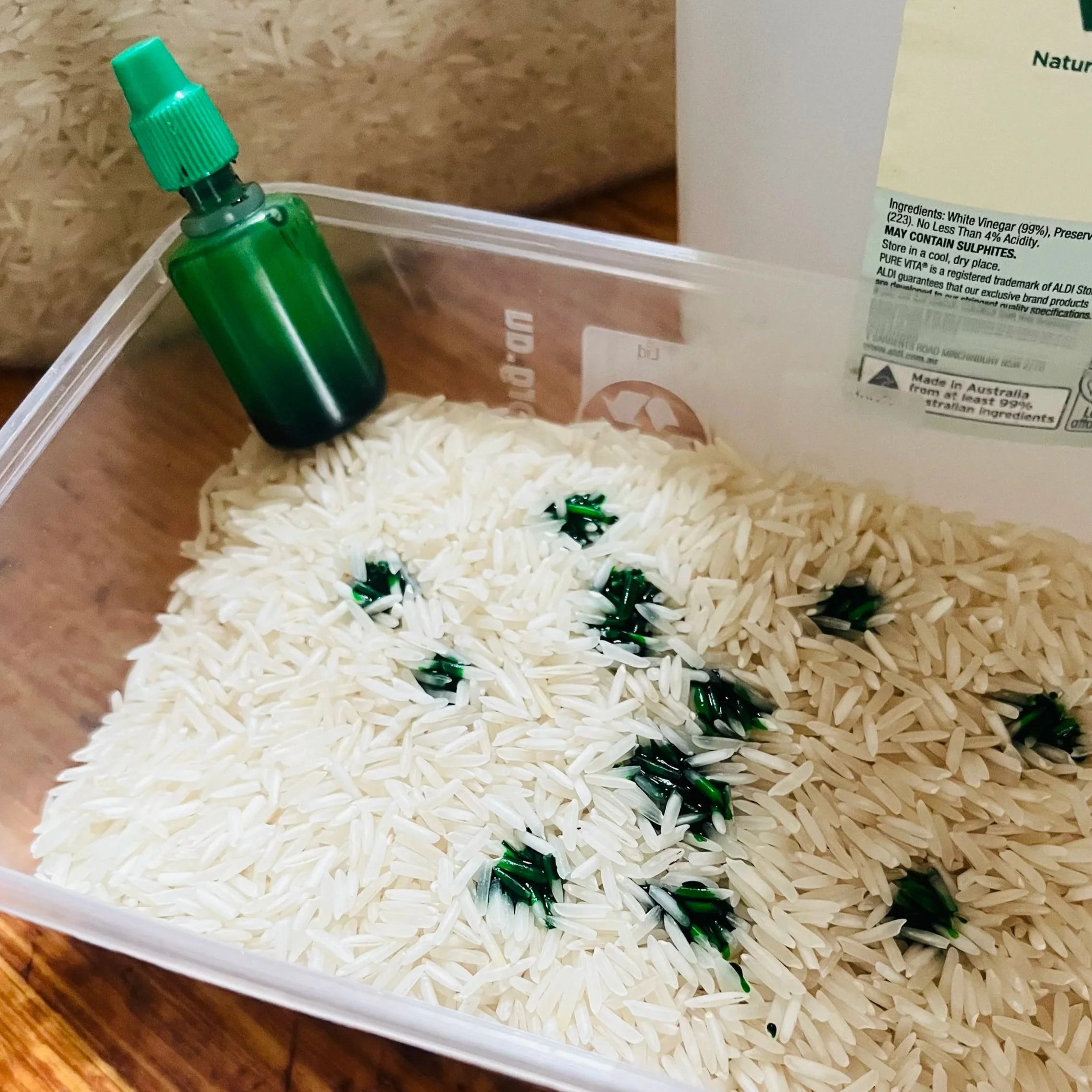
(an old plastic takeaway container is perfect, even a zip-lock bag will work).Add a few drops of food colouring onto the rice.
Splash a small amount of vinegar onto the rice (around half a teaspoon per cup).
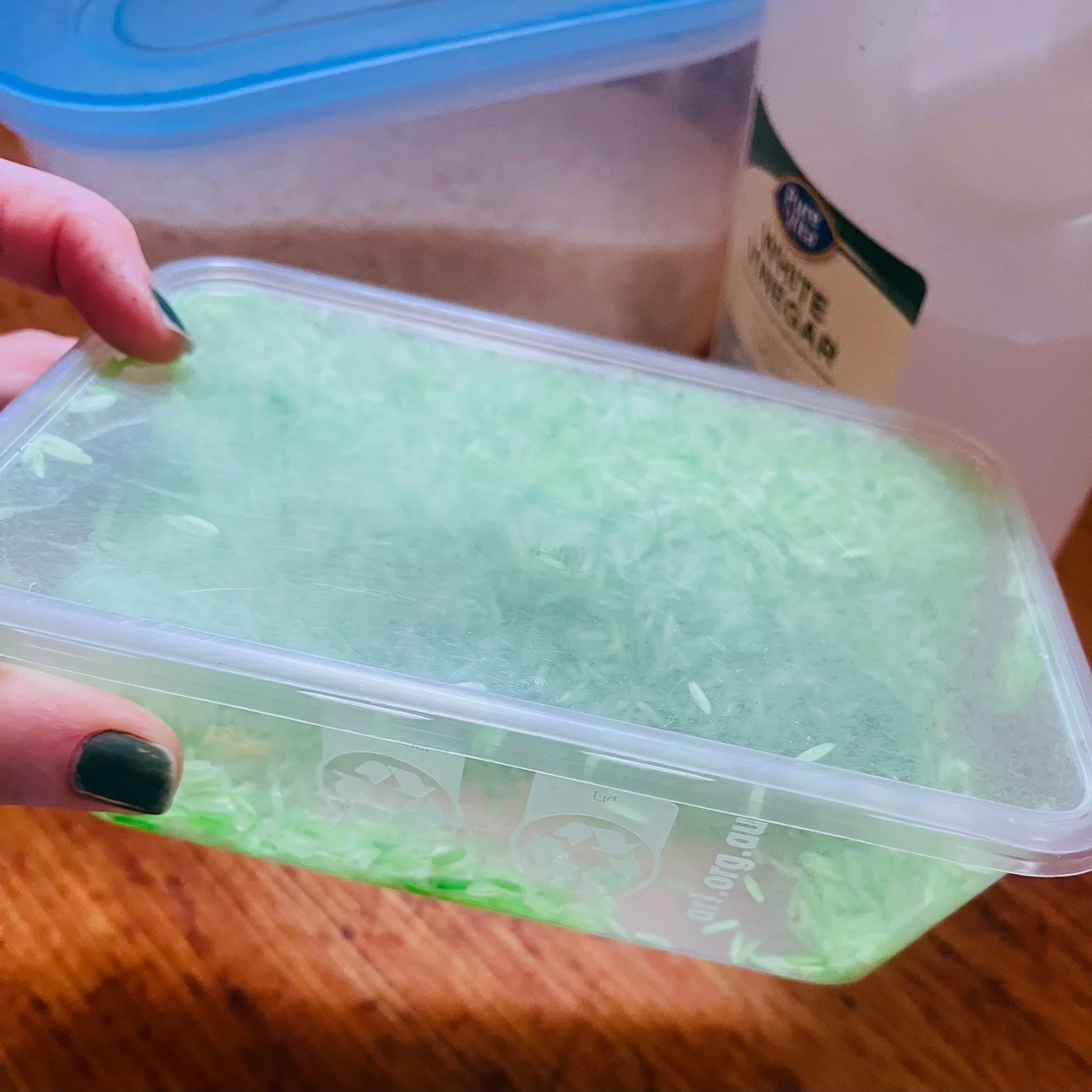
Pop the lid on tightly, then shake the container vigorously.
You’ll find the vinegar enables the food colouring to disperse throughout the rice to coat it without making it very wet.Check the colour: add more food dye if it’s too pale; add more rice if its too bright; top up vinegar accordingly.
Take the lid off the container.
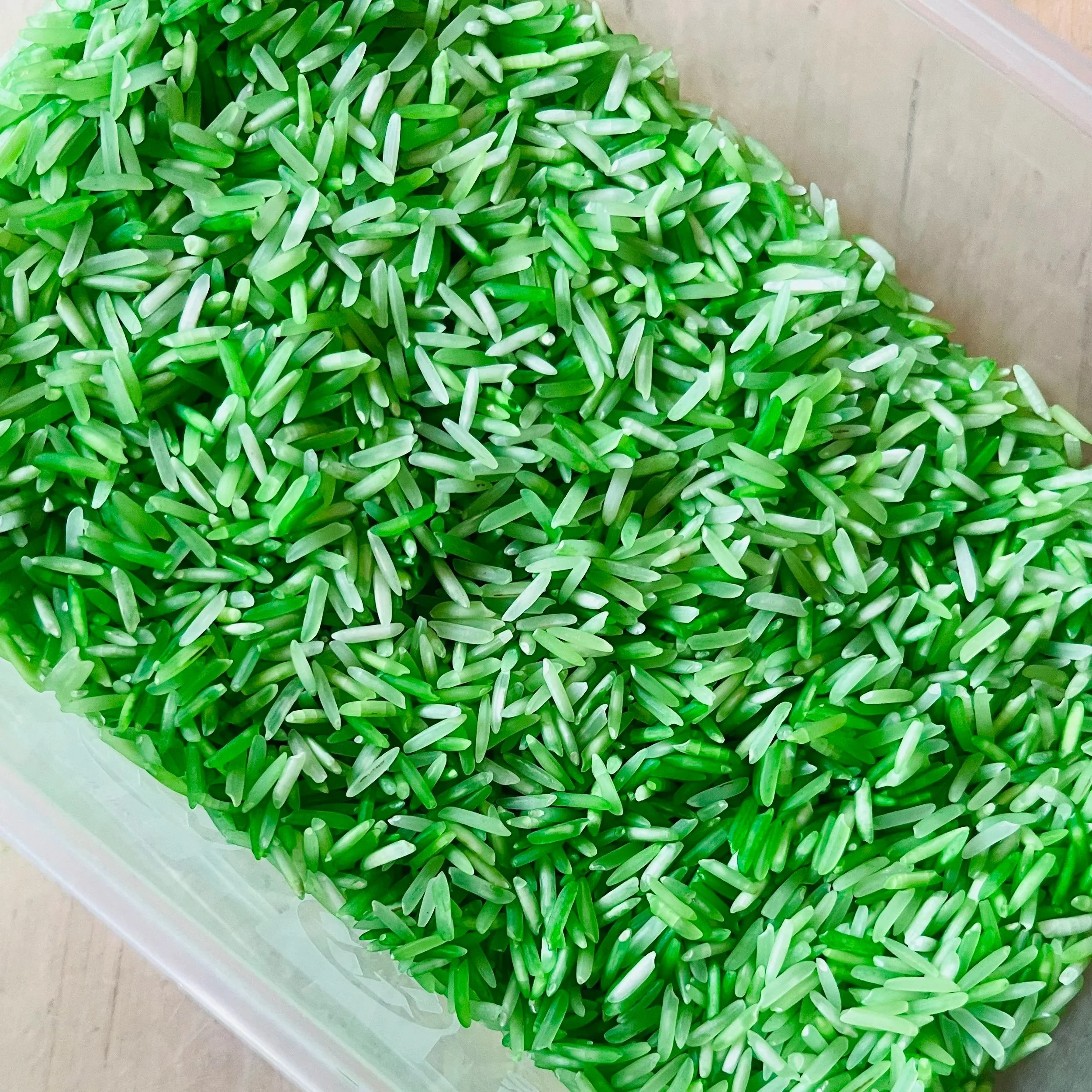
Leave the lid off for an hour or so to let the rice air dry (overnight is even better).
Use one container for each colour. Once dry you might pour the colours together to create pretty multi-coloured effect.
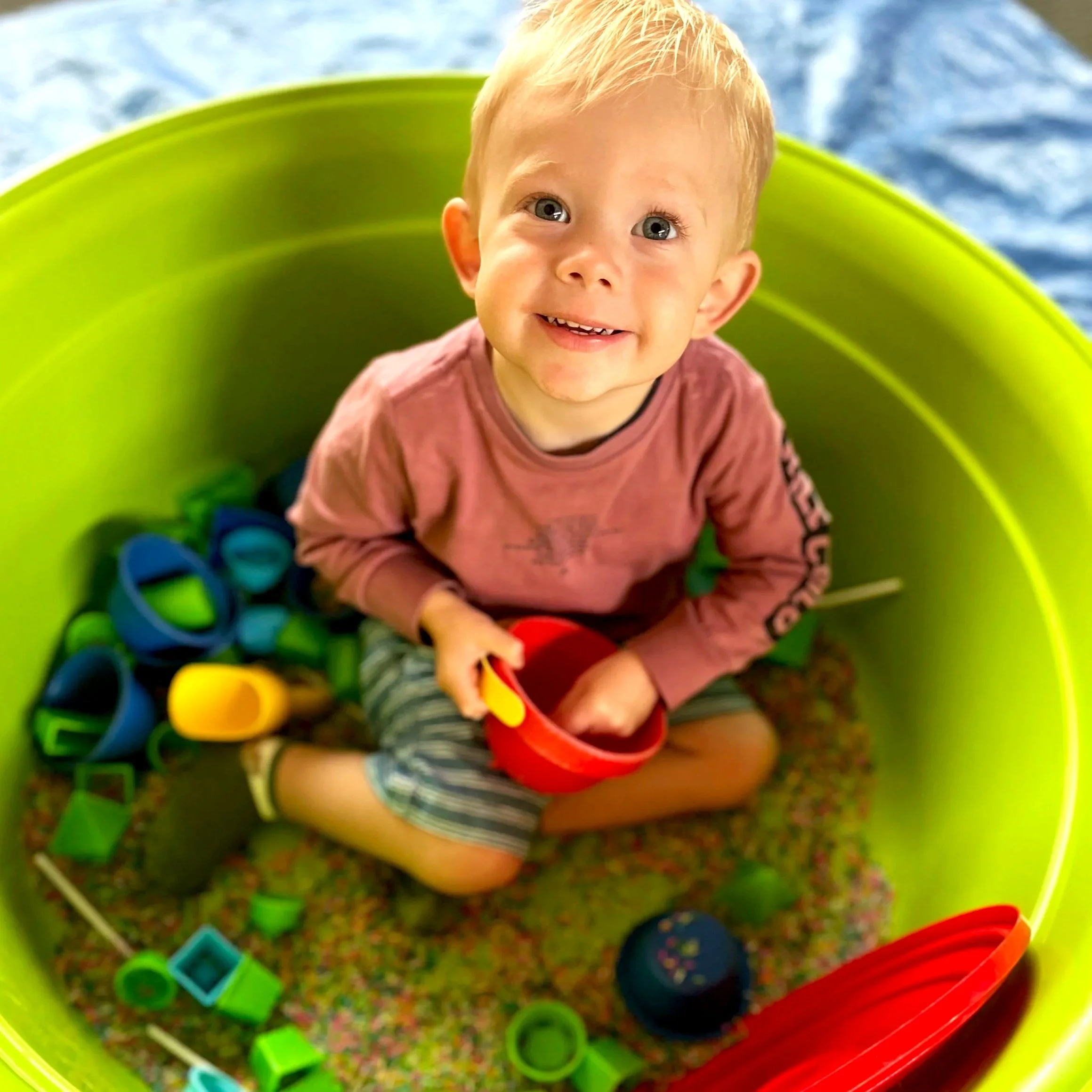
Pour the colourful rice in a wide, low container such as a laundry tub and offer it along with a measuring cups, scoops, funnels and spoons.
Stored in a lidded container it will last for many, many playtimes.
You can extend the activity by adding other materials such as split peas, beans or lentils.
As always, be mindful of safety, and supervise young children to prevent choking hazards.
How does sensory play benefit young children?
it supports them to develop their fine motor skills through grasping, grabbing, holding etc.
it builds hand-eye coordination
simple actions such as pouring, raking, scooping and digging invite kids to practice practical life skills and observe their results
interesting textures and colours activate their senses and stimulate their imaginations
it builds language development through the naming of things such as colours and actions
it introduces, in simple ways, concepts such a ‘full and empty’, volume and measurement
it sparks creative play ideas such as finding buried treasure or cooking
playing alongside others promotes social interaction, taking turns, and cooperation
it’s fun… enjoy!