Playdough's besties
In my many years of attending playgroups, firstly as a parent and later as a facilitator, I reckon I can speak with some confidence when I cheerfully assert ‘everyone loves playdough"!
Our playdough table is a favourite spot at every session, a happy space for kids who like to squish, squeeze, imagine and create.
Invariably there’ll be a parent seated alongside, also squeezing, modelling and chatting. Oh and if I had a dollar for every time I overhear a playdough-ing grownup say “oh this feels so nice” I’d be rich!
This broad appeal makes playdough a great material to offer your kids at home, and with a bit of lateral thinking you can manage to provide both playdough and its most popular accessories using things you already have around the house.
But before I get onto home-made Playdough and its best home-made accessories, did you know that the commercial Play-doh you find in the toy aisle has an interesting history?
The Play-doh story
Almost a century ago the dough we know and love existed in homes long before being considered a “plaything.” In fact, it was marketed and sold solely for another purpose: as a wallpaper cleaner!
The story began in the 1930’s when a worker at a struggling wallpaper company in Cincinatti, Ohio concocted a malleable wad of flour, salt and water that could wipe soot off wallpaper. For over 20 years it was sold by Kutol as a cleaning product.
As heaters modernised and walls were left less sooty they required less cleaning, so by the 1950s sales of the cleaning dough had declined. Around this time a pre-school teacher within the family recognised the Kutol cleaner’s potential as a craft and play material. She managed to convince the company of this idea by showing samples of her students’ creations, and even suggested the name Play-doh.
Inspired, the company’s management reformulated and repurposed the product they were already making, using the same heavy-duty equipment and manufacturing space—only this time, the end product was a child’s toy instead of wallpaper cleaner.
The soft pliable compound caught the eye of Captain Kangaroo, a kid’s tv host, who featured it regularly on his show through the 50s. This boosted its profile until, in the following decades, it became firmly entrenched as a toy sold along with dozens of accessories.
Play-doh is now a children’s classic, but you don’t have to buy commercial Play-doh or its commercial accessories. It’s super easy to make at home, here’s how:
Playdough recipe
1 cup of plain flour
1 cup of water
½ cup of salt
2 tablespoons cooking oil
2 teaspoons cream of tartar
a few drops of food colouring
Mix together all ingredients and cook over a medium heat in a very well greased saucepan.
Keep turning in the centre. The mixture is cooked when it forms one springy mass.
Remove from the saucepan and, when cool enough, knead the mixture until the right texture is achieved. It will keep for several months in an airtight container.
Playdough’s besties
You also don’t need to buy Play doh tools - you may already have lots of bits and pieces around the home that work perfectly with Play doh.
Examples include:
Patty pans, sticks or matchsticks inspire instant cupcakes with candles. Add a box oven, or signage to create a cake shop.
Plastic cutlery, plates and cups - watch the cafe come to life.
Rolling pins and cookie cutters are fun for busy bakers
A garlic press is handy for extruding playdough noodles
Children’s blunt plastic scissors always are a hit, and helpful for building scissor skills.
Natural materials: sticks, leaves, gumnuts and cones are especially suitable for old playdough at the end of its life, as they sometimes leave debris behind on the dough.
Take tired old playdough outdoors, where it can become a fun component of any mud kitchen and perfect in potions.

Playdough ideas are often amazing!
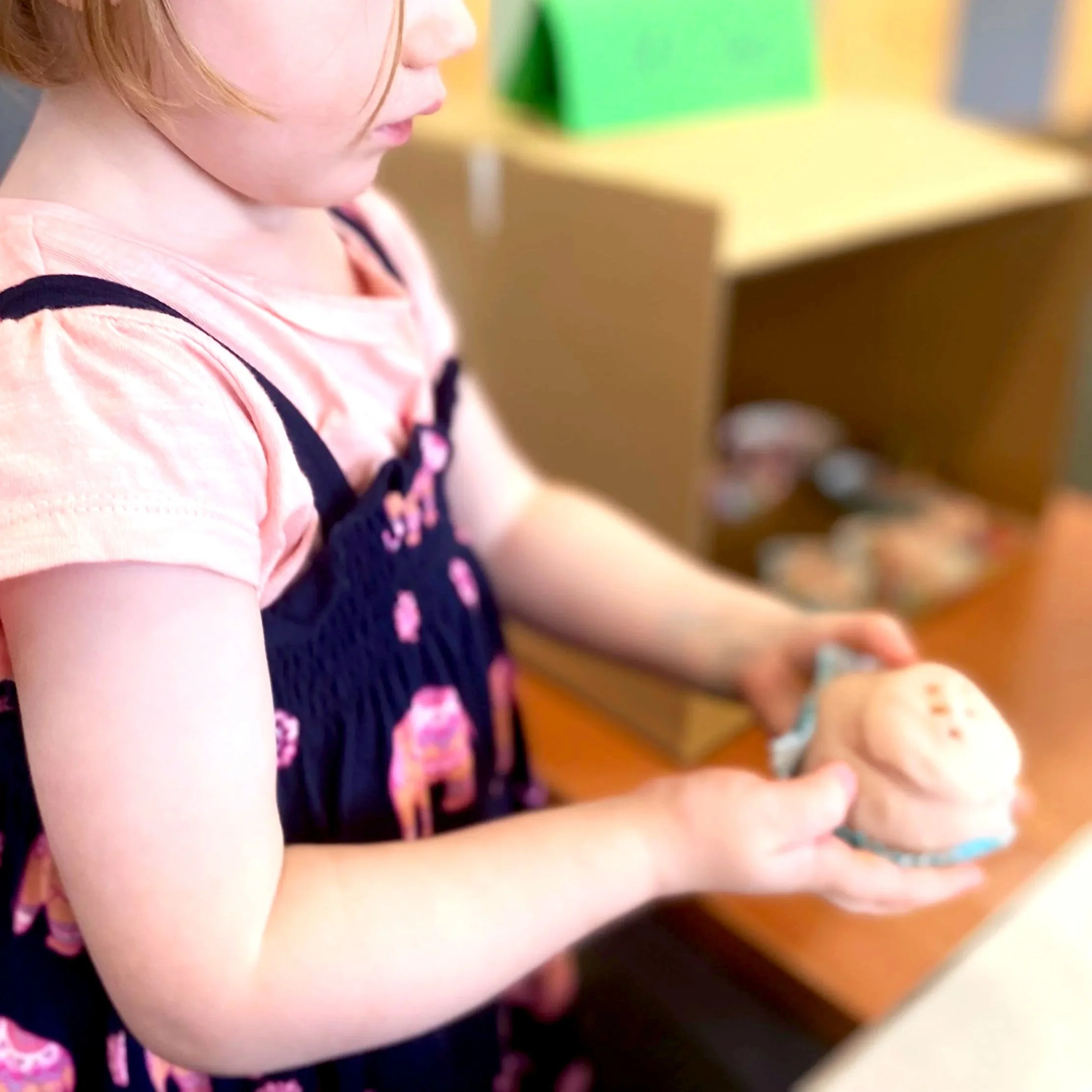
Cupcakes are made with care…
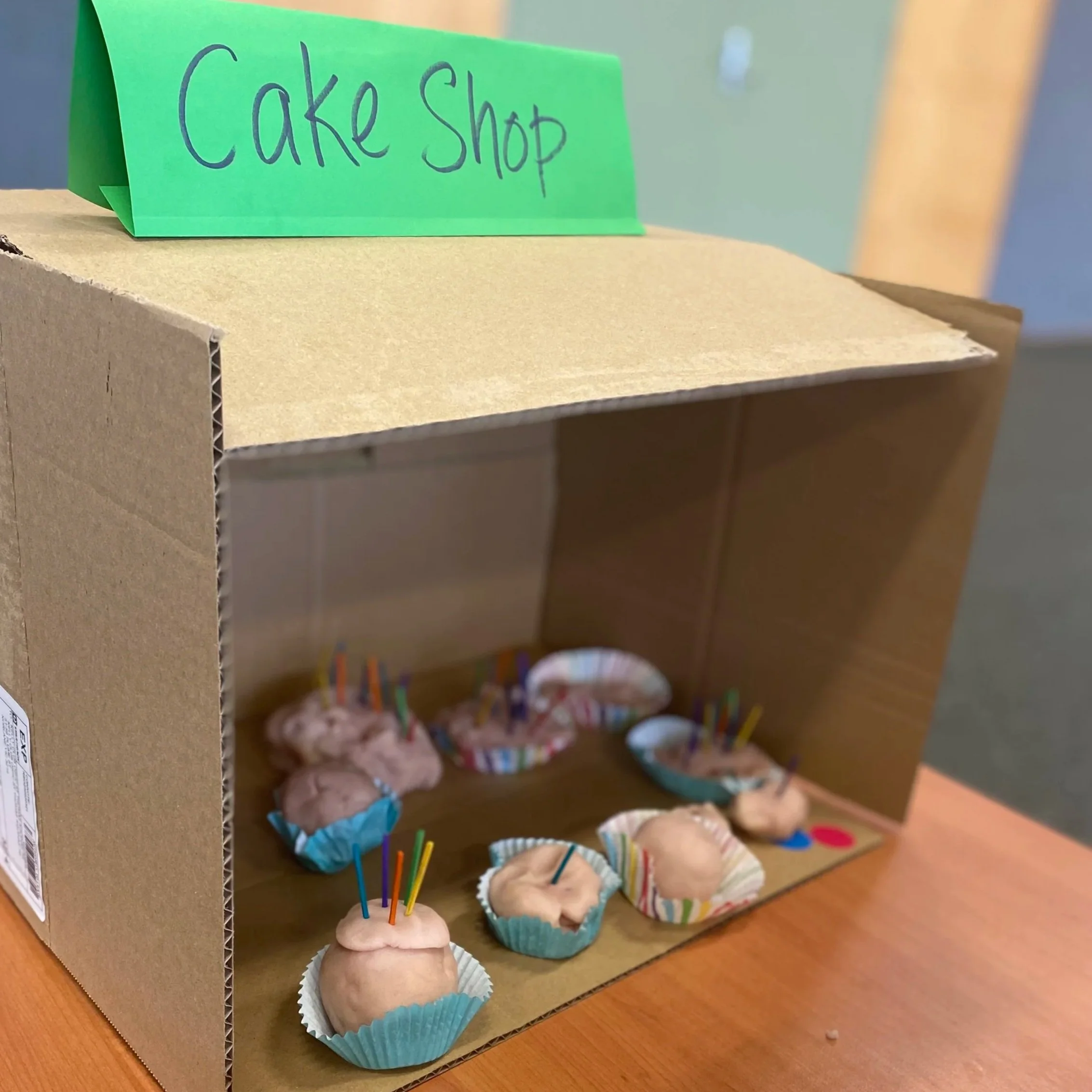
… and can be popped into the oven.
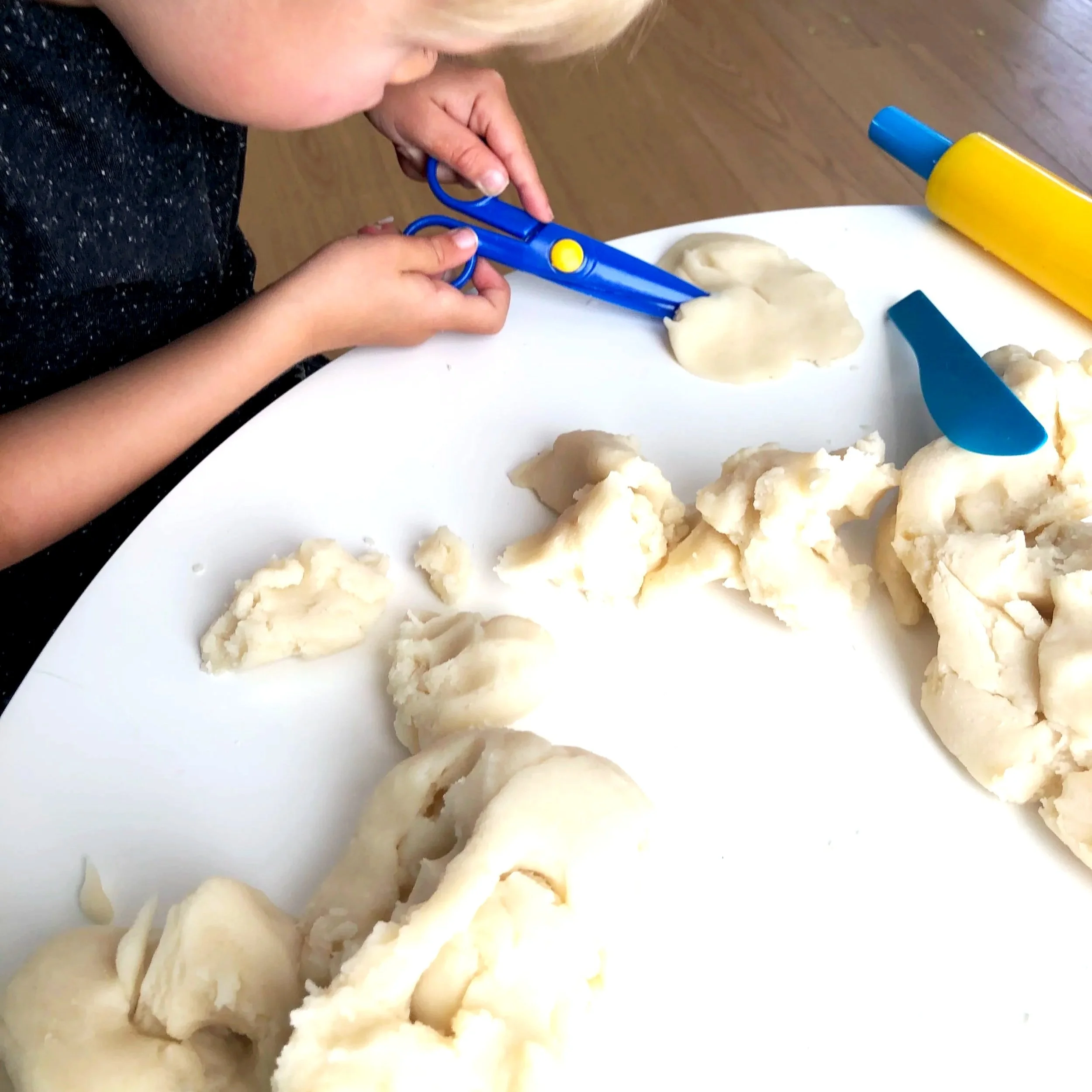
It’s soft enough to cut using plastic scissors.
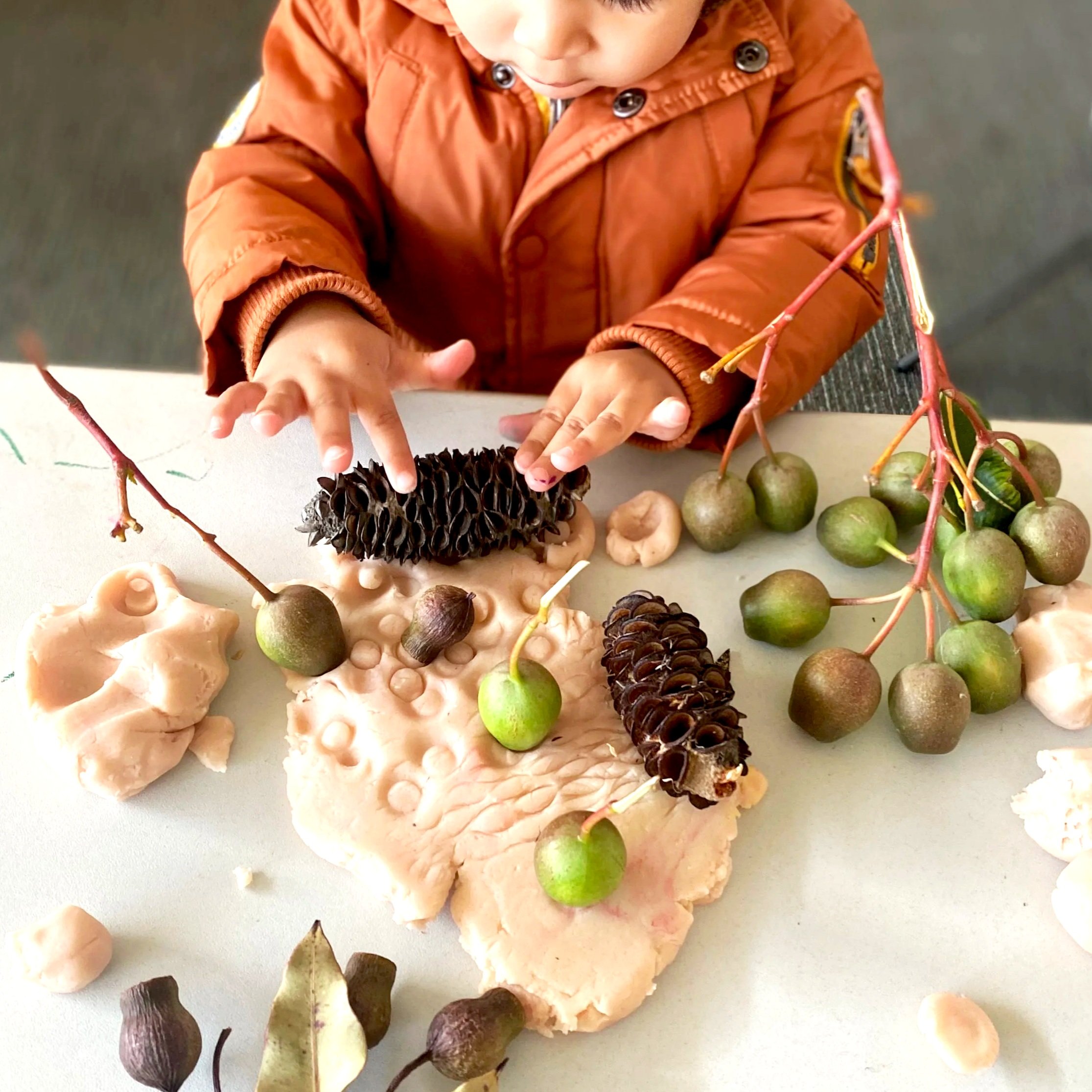
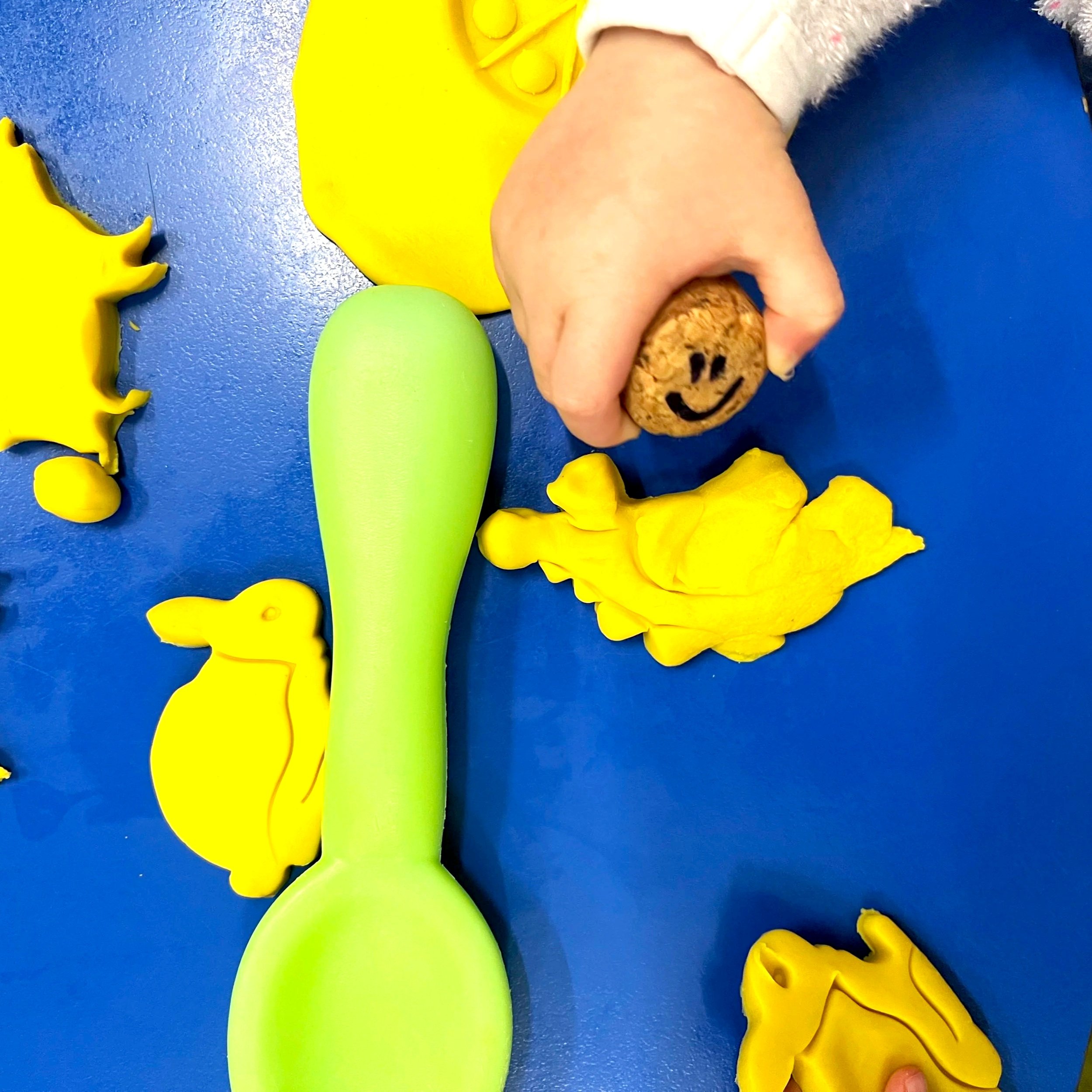
Natural materials can make lovely stamps and impressions in the dough.
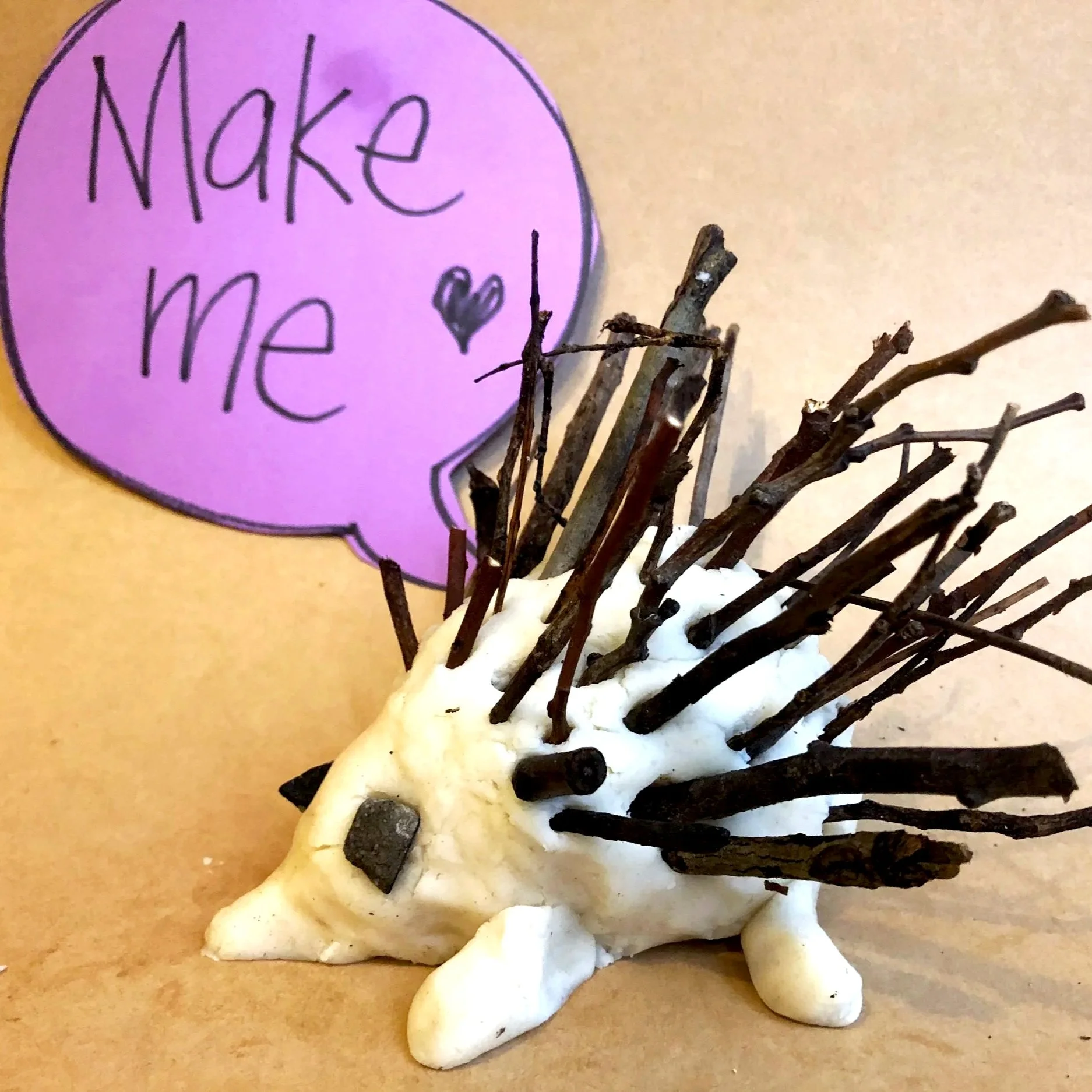
Sticks and twigs offer fun opportunities for candles, antenna or even spikes.
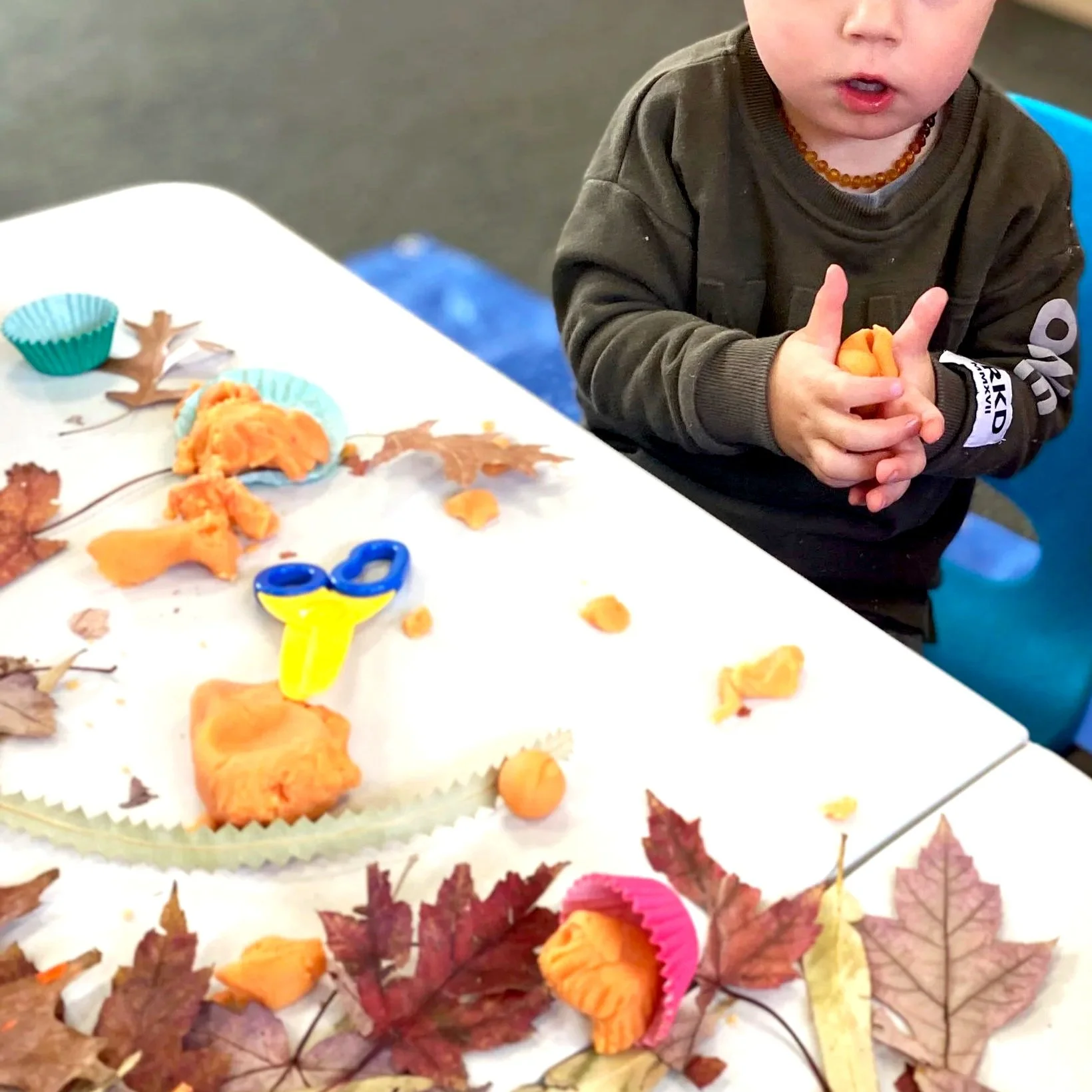
Autumn is a great time for collecting playdough accessories.
The clean up
If the thought providing playdough at home makes you squirm just thinking about mess, here are a few tips for a painless cleanup once playtime is done:
You can remove small pieces of moist playdough from hard surfaces (& even some carpets) by gently pressing a larger piece of moist playdough against them and lifting them away.
Dry pieces of playdough can generally be picked off. Avoid using water or detergent, as that may make them dissolve and become harder to remove.
If playdough gets into the carpet, let it dry. When it's dry, loosen the pieces with a stiff brush, then pick them up by hand or with a hand-held or regular vacuum. Again avoid wetting it.
If your child creates a masterpiece you want to cherish, you might preserve it with a photo. Left to dry, playdough will eventually crack and crumble