Drips, drops & splodges
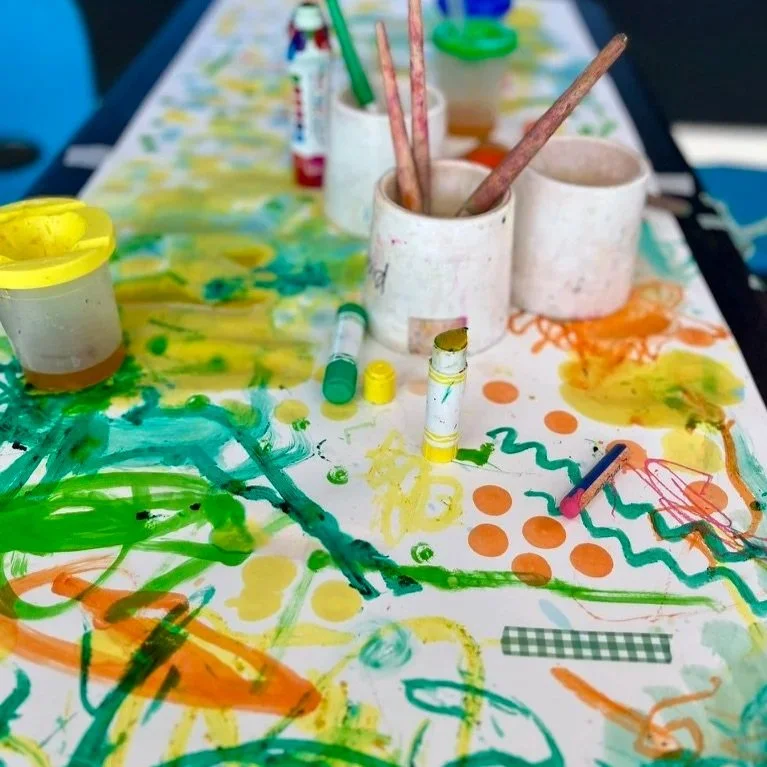
Sometimes parents are wary of the ‘splodge’. I’m talking about when we avoid offering little artists any of those messy, drippy or wet art activities that might seem a little ‘risky’ for a kitchen bench.
But those drippy, sploshy open-ended art activities can create a kind of magic. Not only are they colourful and fun but they invite all sorts of creative sensory learnings for little artists.
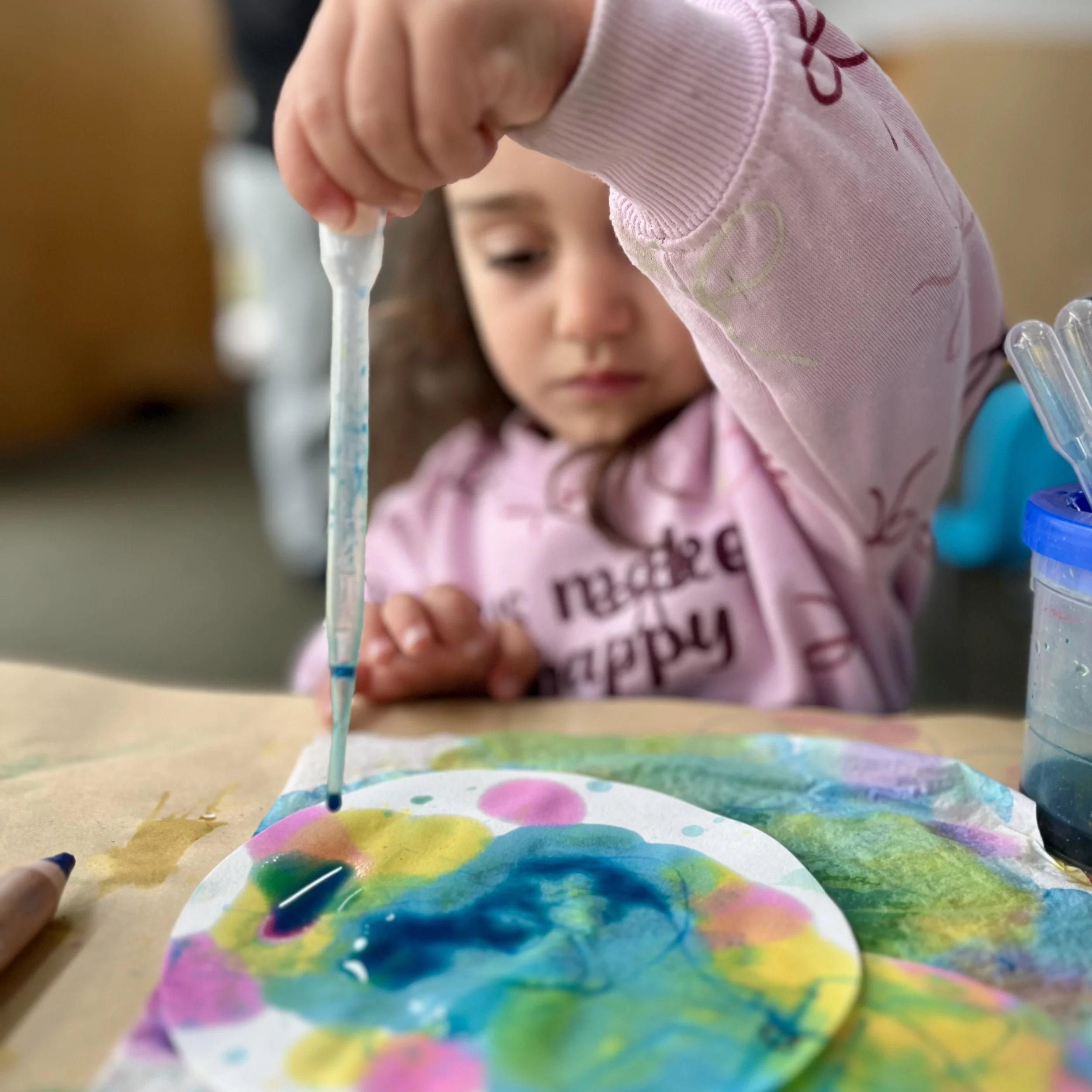
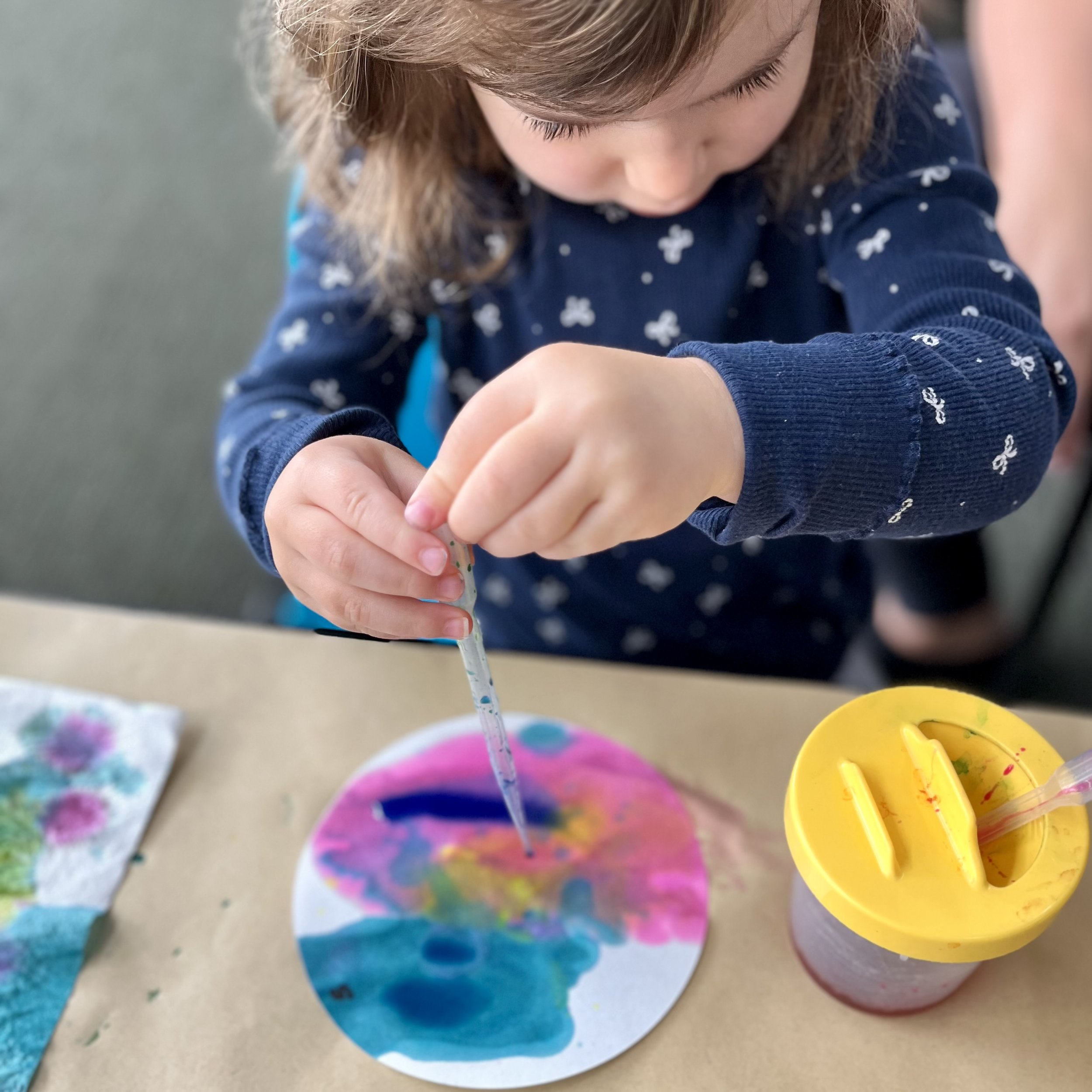
Take painting with droppers for example.
Plastic droppers (also called pipettes) are a really fun creative tool to include in your kid’s art box. They’re readily available at art shops, large stationery stores or online (see pics at the end of this article). They tend to come in packets at a pretty reasonable price, and contain enough pipettes to share with friends.
The benefits
Children have lots of opportunities to experiment and learn when painting with droppers:
Cause & effect: children learn that the action of squeezing and dropping causes an outcome. They can see how the pressure they use to squeeze the dropper changes how much paint is sucked up or expelled. Likewise the incline of the paper impacts how drips run down the page.
Fine motor skills: Using droppers requires a pincer grip, which exercises the small muscles in the fingers and hands needed to hold a pencil. Eyes focus and track the dropper, and the whole activity builds coordination.
Colour theory: As colours merge and combine new colours will magically appear.
The method
Protect your table with some cardboard, a flattened box is ideal. Alternatively, offer the activity within a tray or the lid of a plastic storage box. Remember that this is an activity which can very easily be done outside.
Dilute paint with water so that it’s runny enough to be sucked into the pipette. Washable watercolour paint is ideal, or washable ink. If you have made ‘texta juice’ from old textas that will work a treat too (I described how to make it inn a blog posted here in Feb 2023). Avoid using food dye because it tends to stain both surfaces and hands.
Offer 1-3 colours in stable plastic or no-spill cups or containers. If you sit them on plates or a tray you will further reduce spills. Offer one dropper for each colour.
Use absorbent paper and have sheets ready to go, along along with lots of paper towels to drop onto, dip into, or simply mop up any puddles. Dropping onto old drawings works fine. Also provide a thick paintbrush to spread any puddles around.
Demonstrate how to: pinch the bulb of the dropper, place the tip into the liquid, and release the pinch to draw the paint up - then squeeze again to release the paint and let it drip onto the paper.
Allow your child to experiment and explore the process. Dripping, dropping, trailing, mopping and watching the colours blend together are part of the fun.
If the child finds using the dropper too tricky you might do the dripping while they choose colours, watch the process and spread the puddles with a paintbrush.
Embrace the splodge, and have fun!
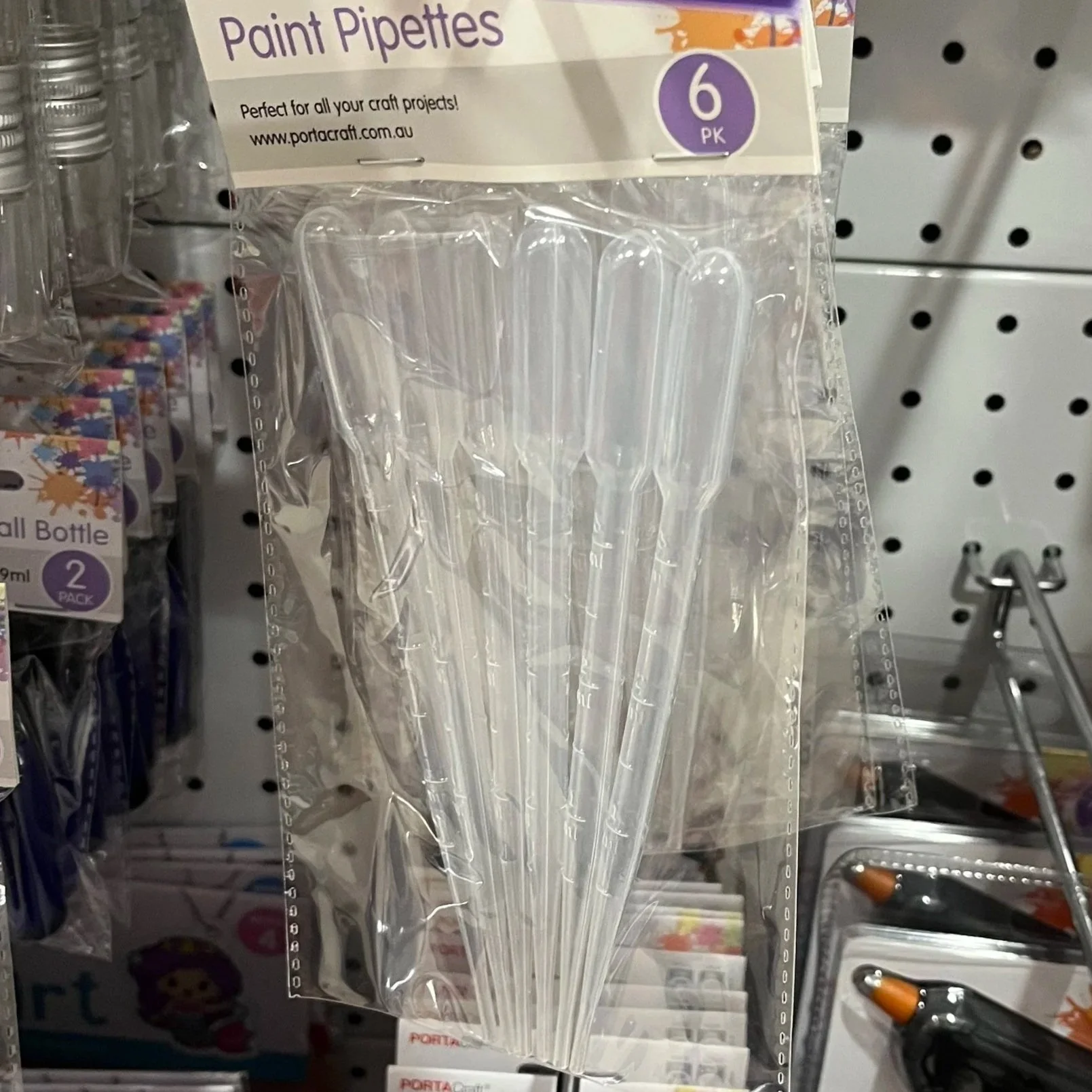
Spotted in a local $2 shop for under $3.
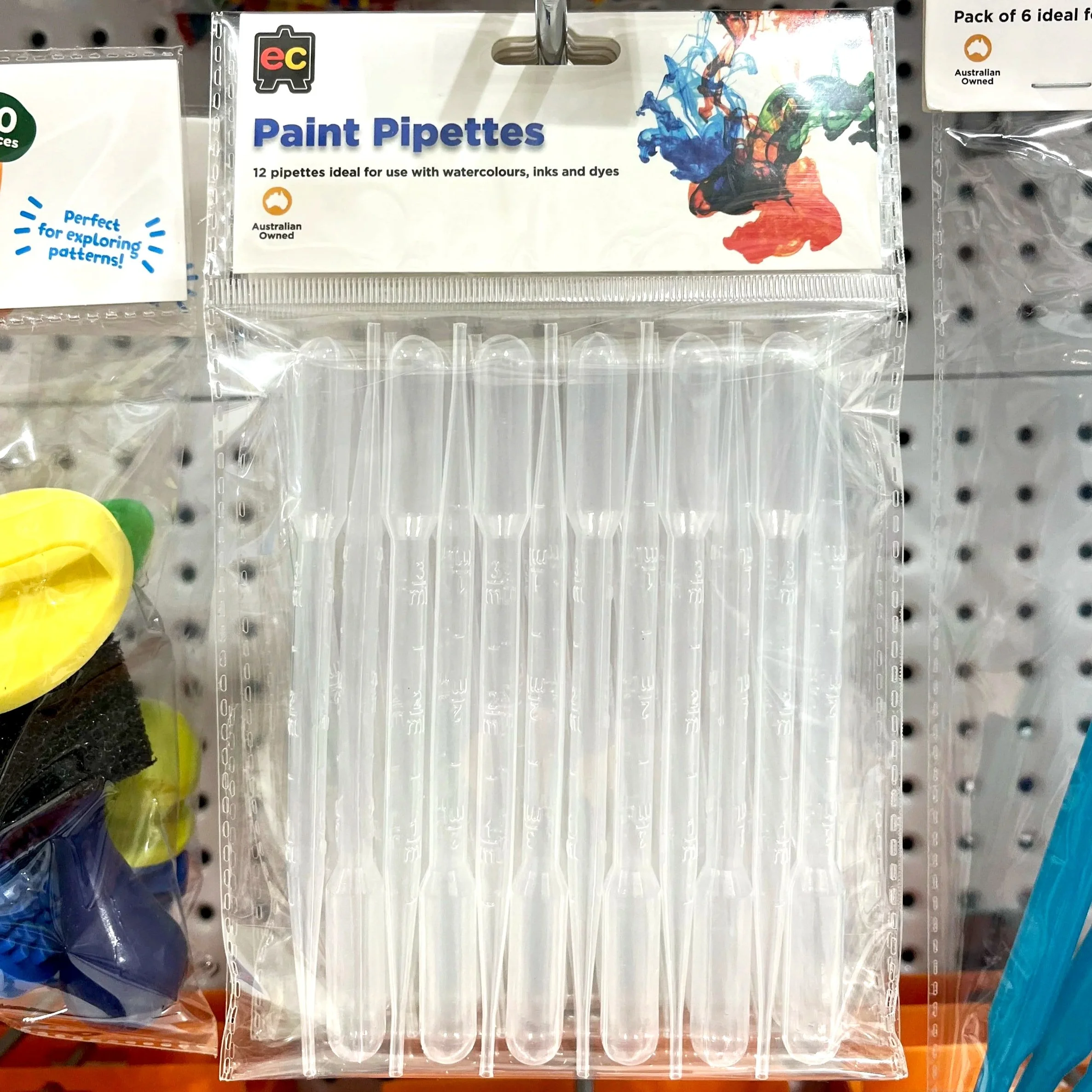
Available at large stationery supplier for under $10.