Bread making with small children
Baking bread can be a nice way to slow your day, add substance to your routine, connect you to generations gone by, and pass on a tradition to your children.
I have my Mum’s bread tins and I always think about her when I’m baking bread.
I also remember as a teenager, when we had moved house and school, taking my Mum’s homemade bread to school, that little bit of love that travelled with me (and that everyone wanted to eat!)
I have memories of making bread with my children, and of mixing up hot cross buns early on Easter morning before we hopped back into bed while the dough had its first rise.
Sometimes the things we add to our routine might not become our children’s memories, but might become our own special ones.
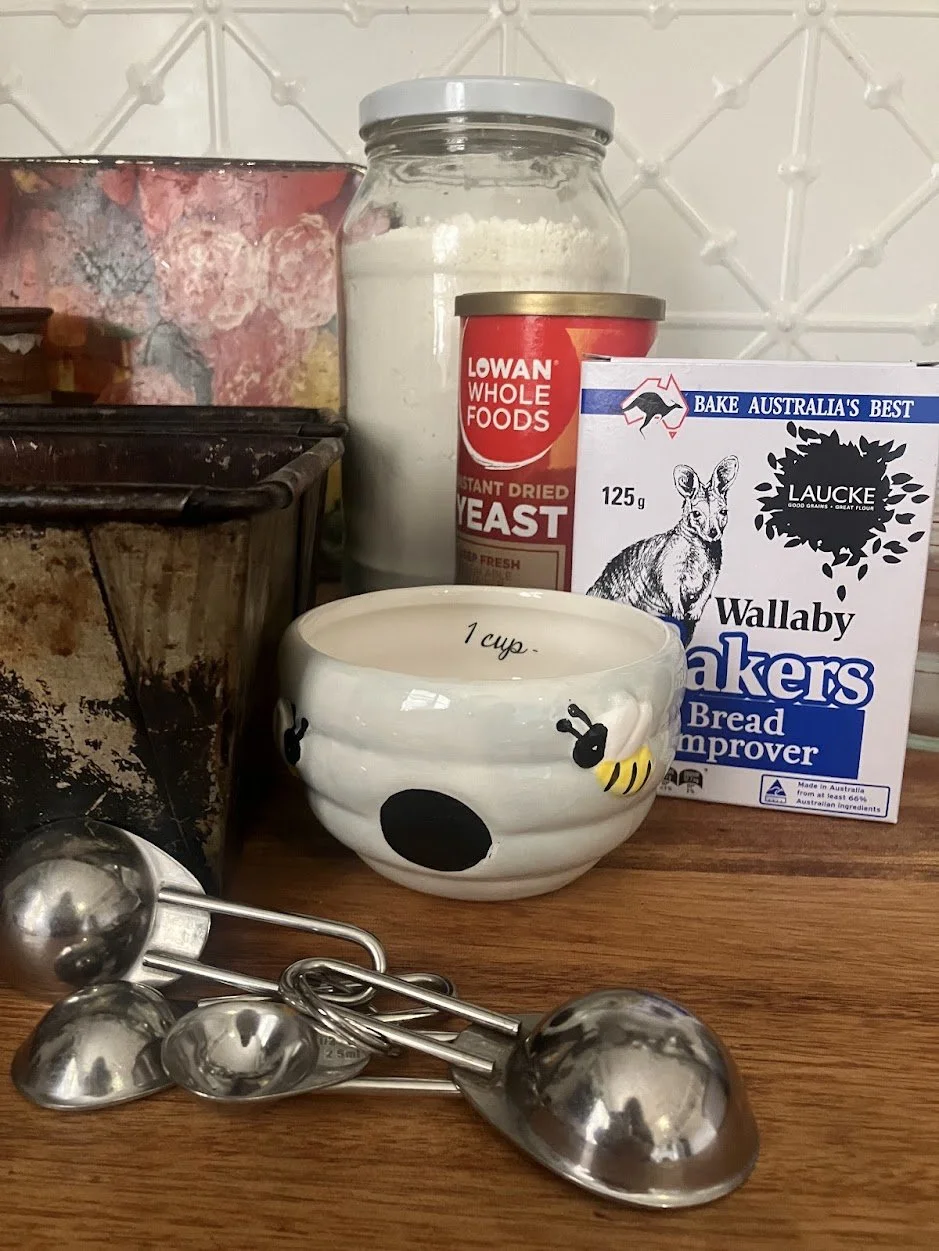
I love using recipes from the Carol and Ken Bates ‘No Knead’ recipe book. You can sometimes pick these up in Op shops or second-hand book shops (a friend gave me one, and I keep searching for them in Op shops and have been able to pass some on to others).
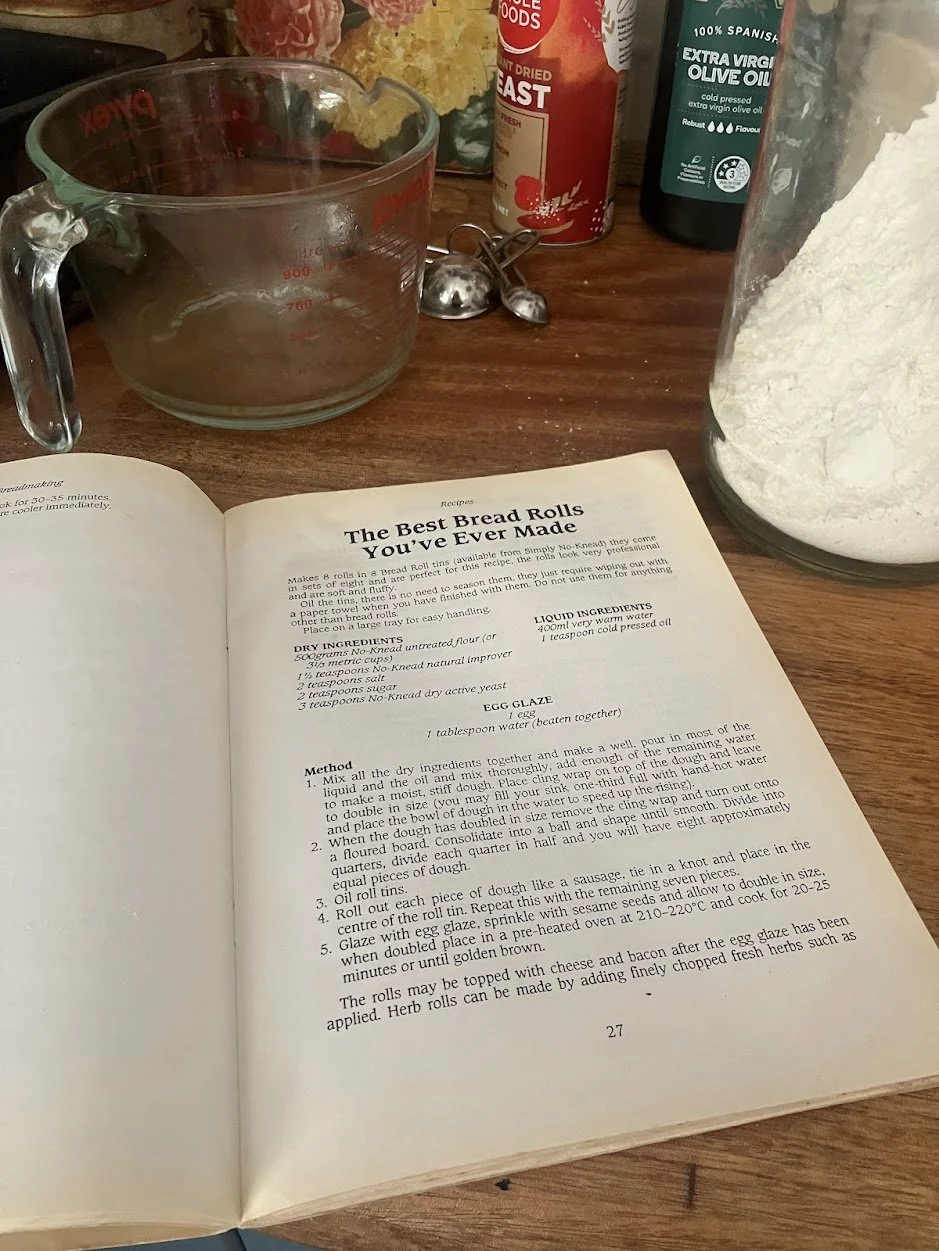

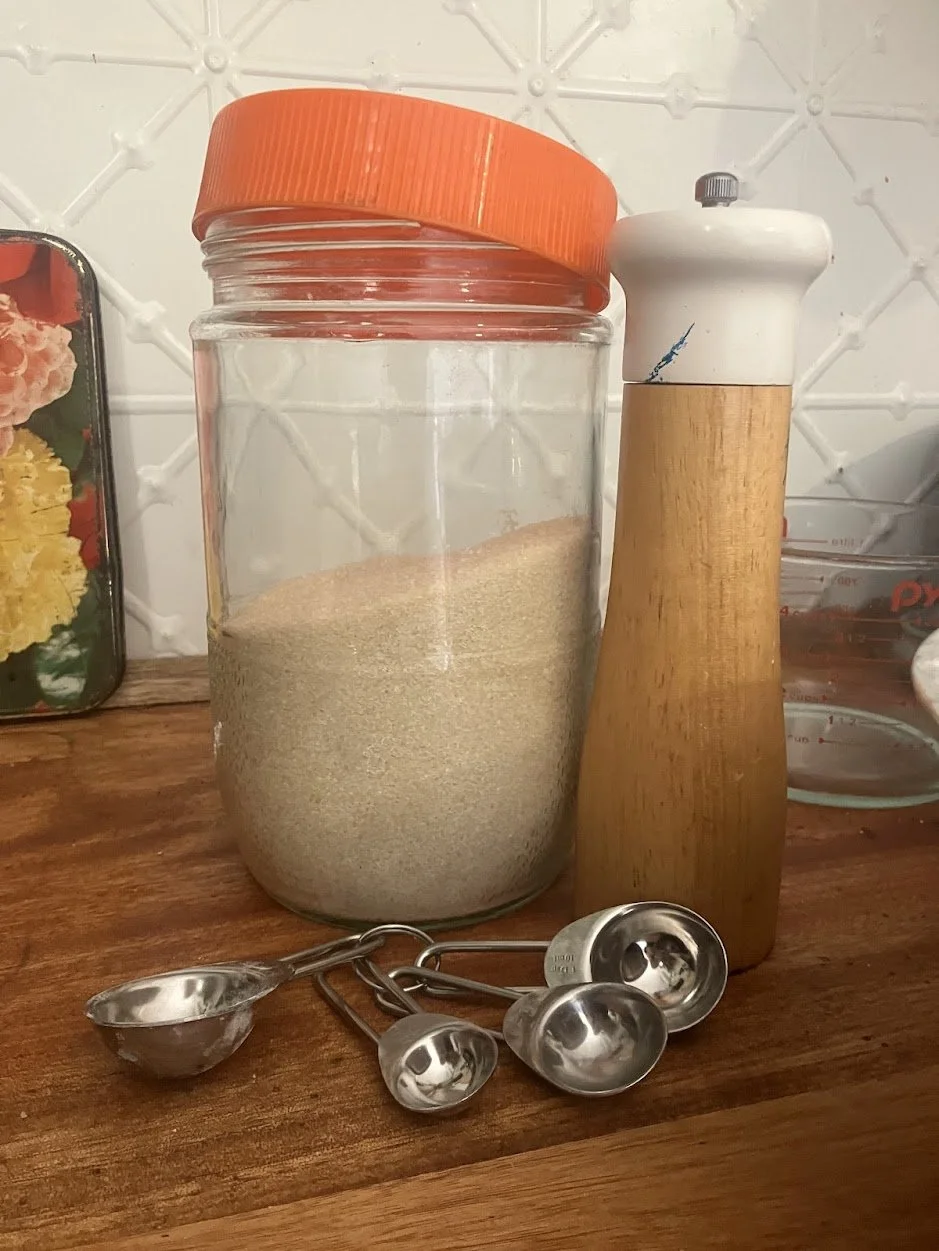
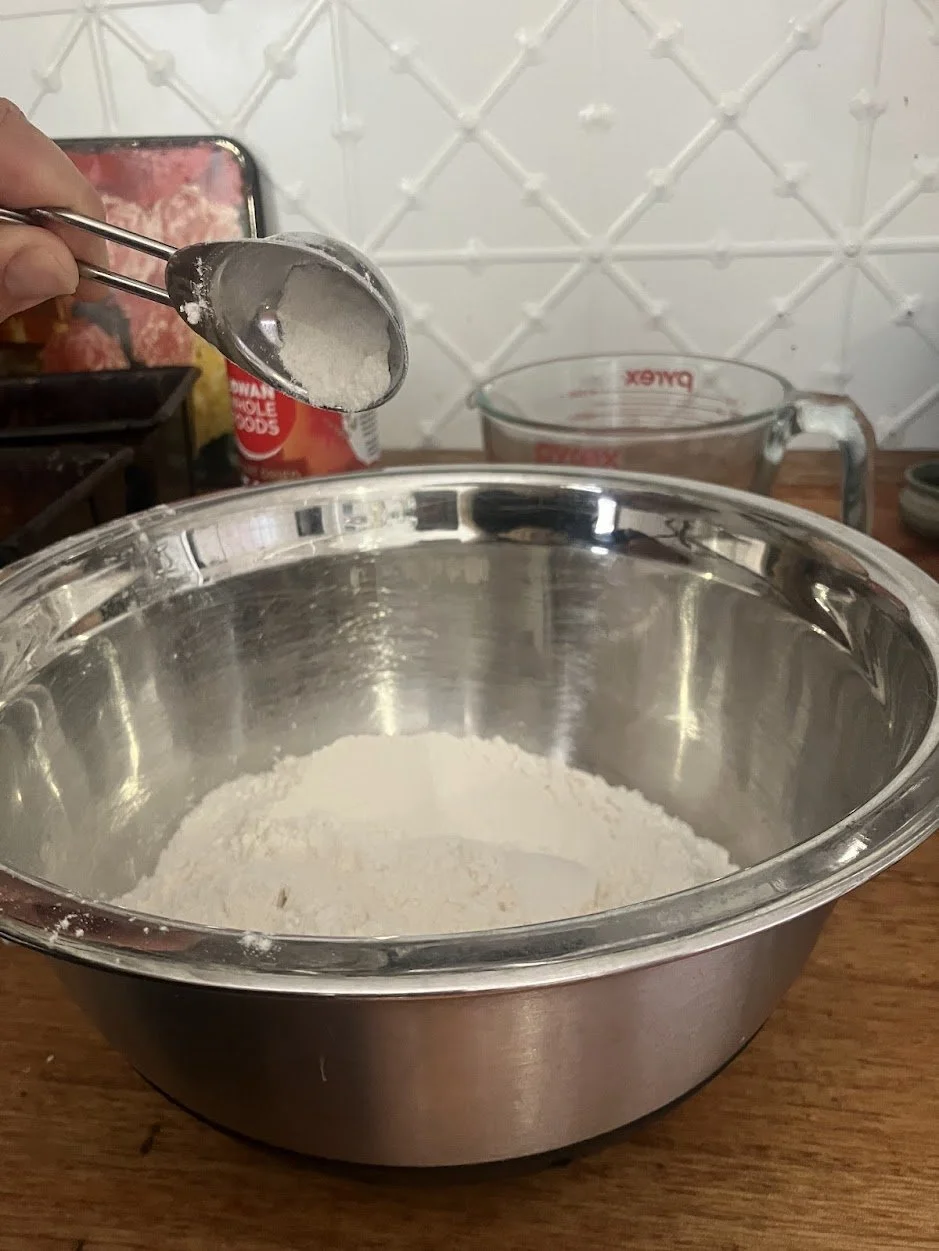
Most likely, you have a recipe you’ve tried before, maybe one that’s been passed down in your family. If you don’t have one on hand, you can borrow a library book or Google, ’Simple bread making recipe’ like this one.
At the end of the day, bread is simple, it’s flour, salt, sugar, water and yeast. This makes it a good thing to do with or for your children. It’s often ingredients we have in the pantry, it costs very little and is incredibly satisfying.
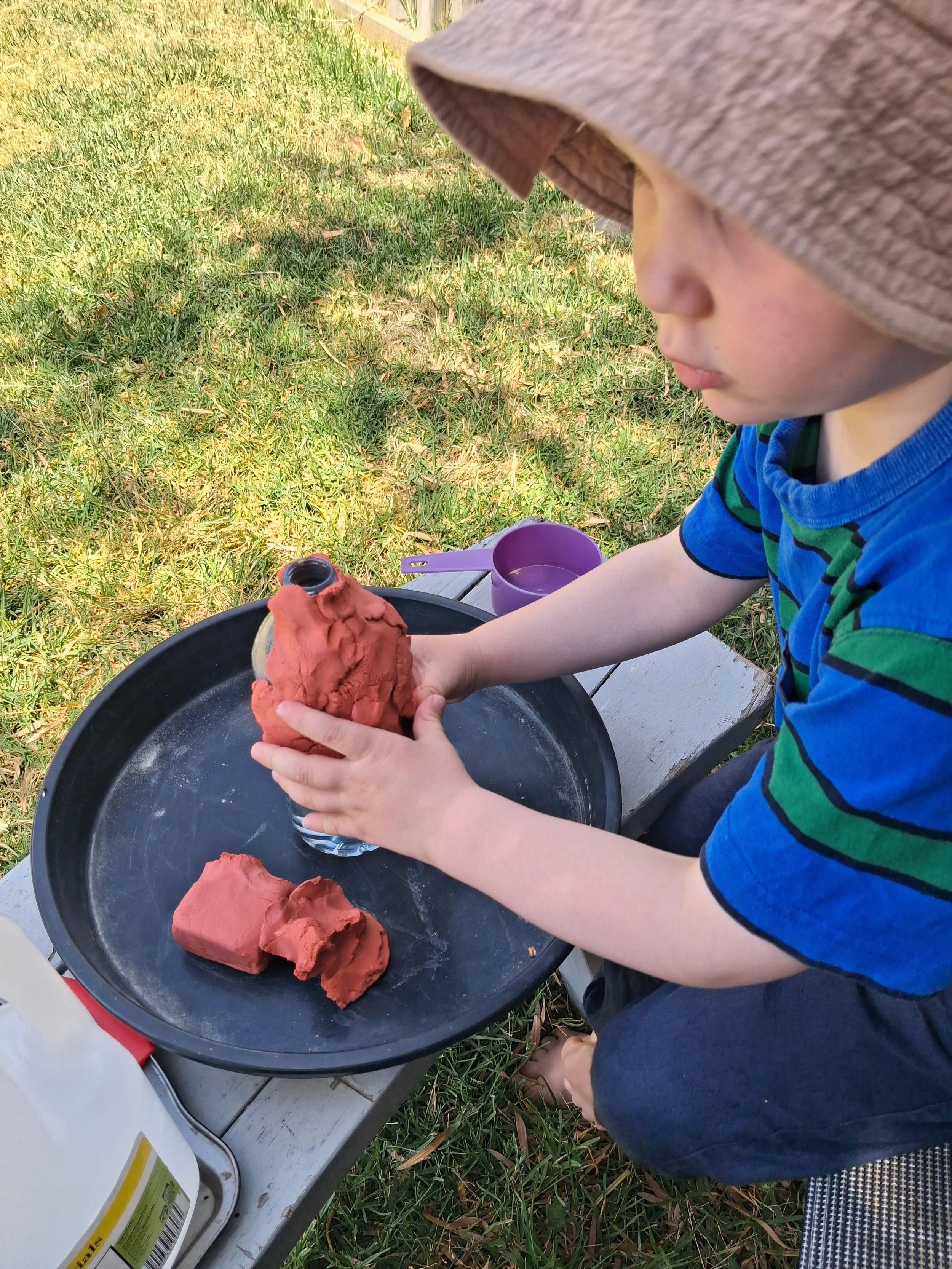
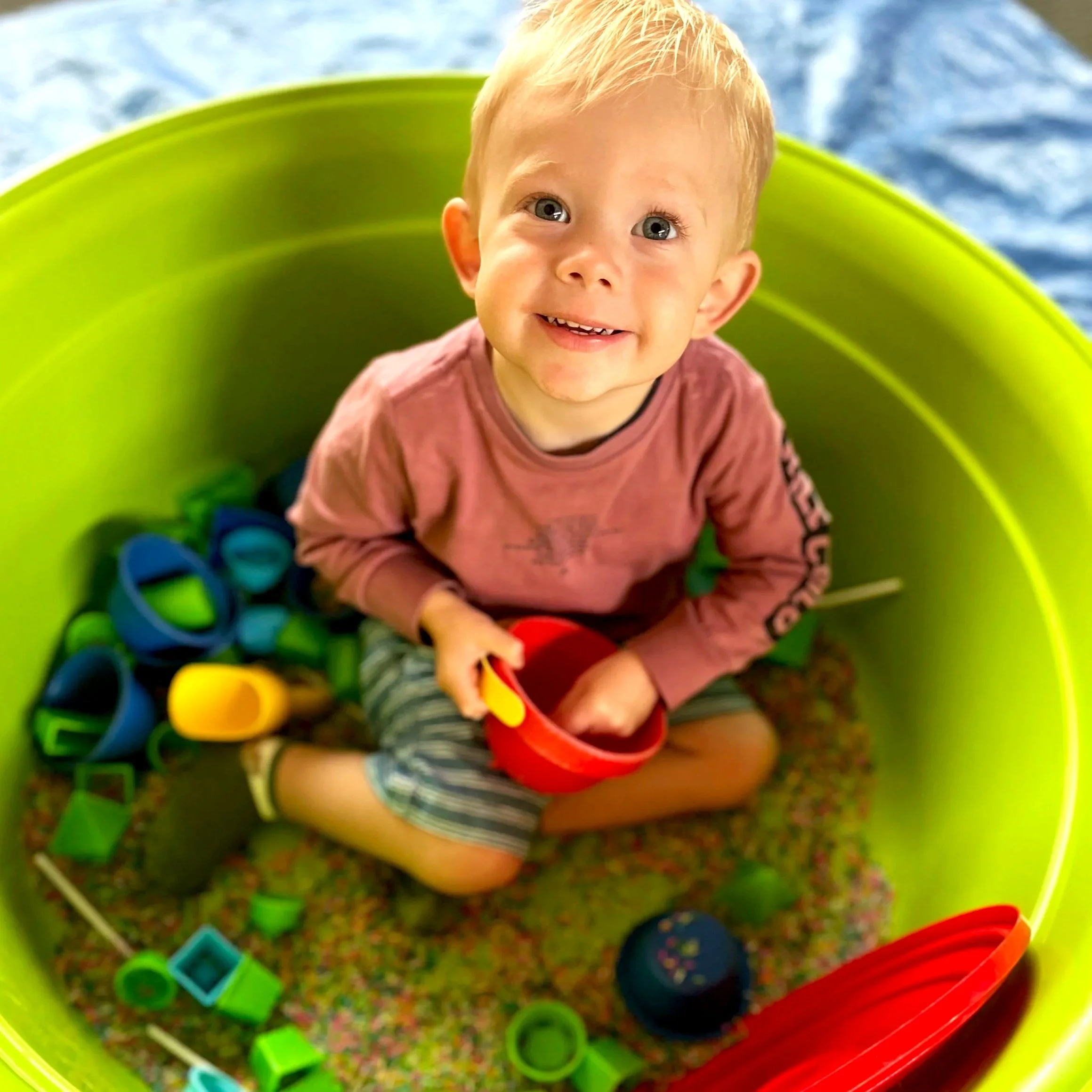
It also makes for good sensory play, ‘stirring’, ‘squeezing’, ‘sticky’, ‘mushing’, ‘pushing’, ‘shaping’ are all words that come to mind when I think of breadmaking with children.
And, of course, ‘mess’!
Some flour is going to get spilt and that’s just part of the day. Depending on the age of your children, they may be able to help with clean up - with a dust shovel and broom, with a damp cloth on the table, or having a go washing up in the sink.
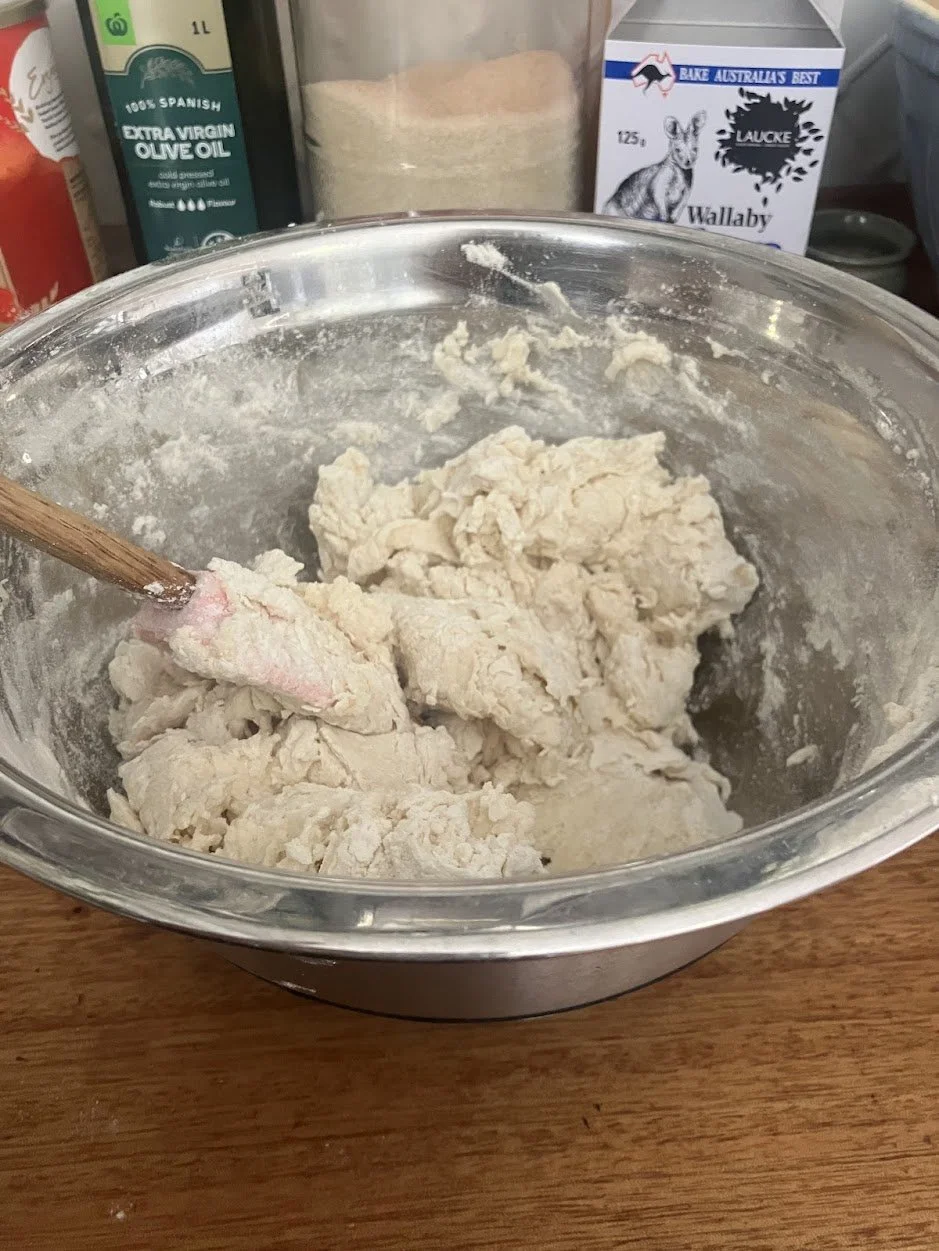
There’s a few pauses in bread making, and that can be a nice part of the rhythm.
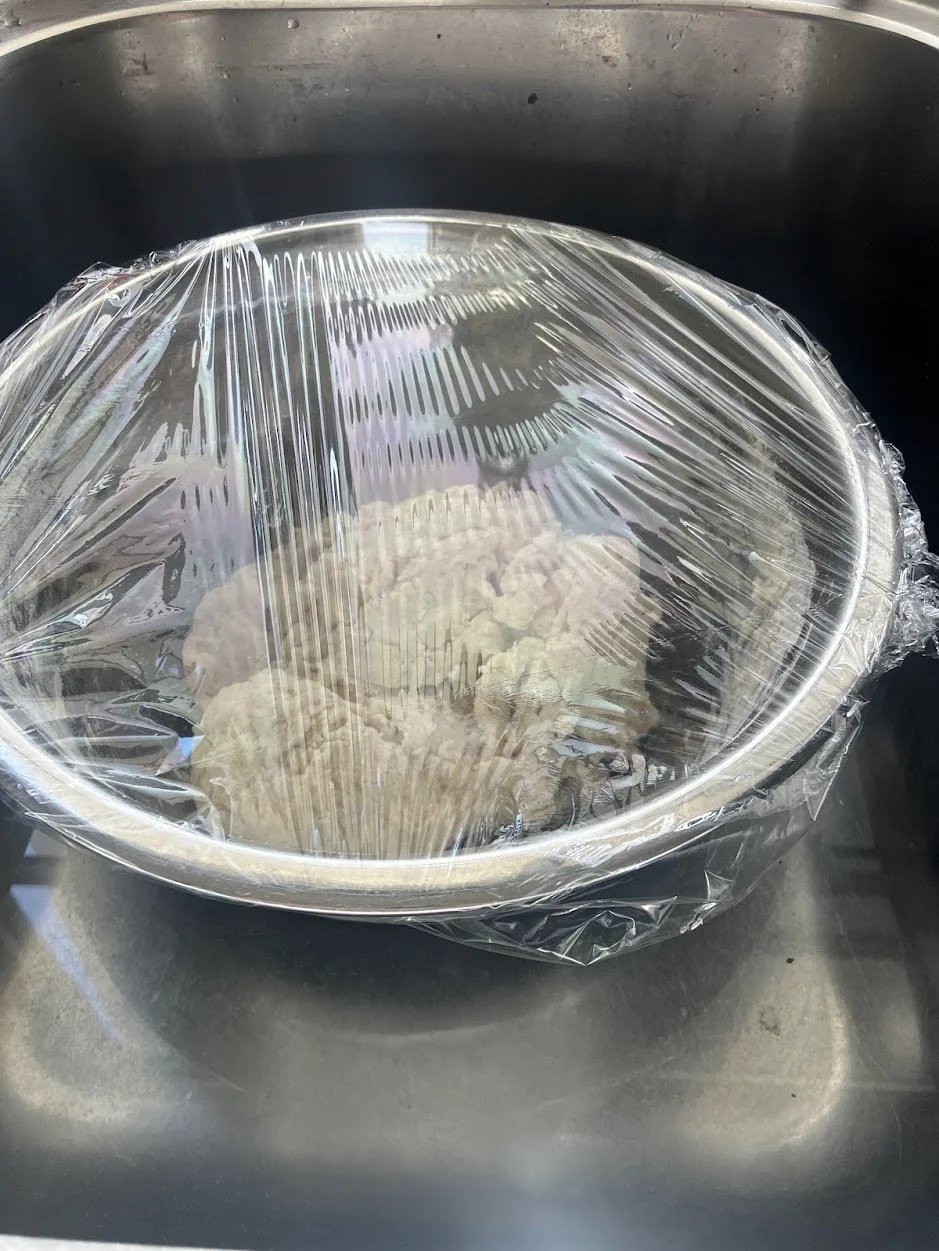
Mix the dough, leave it to rise, go to the park.
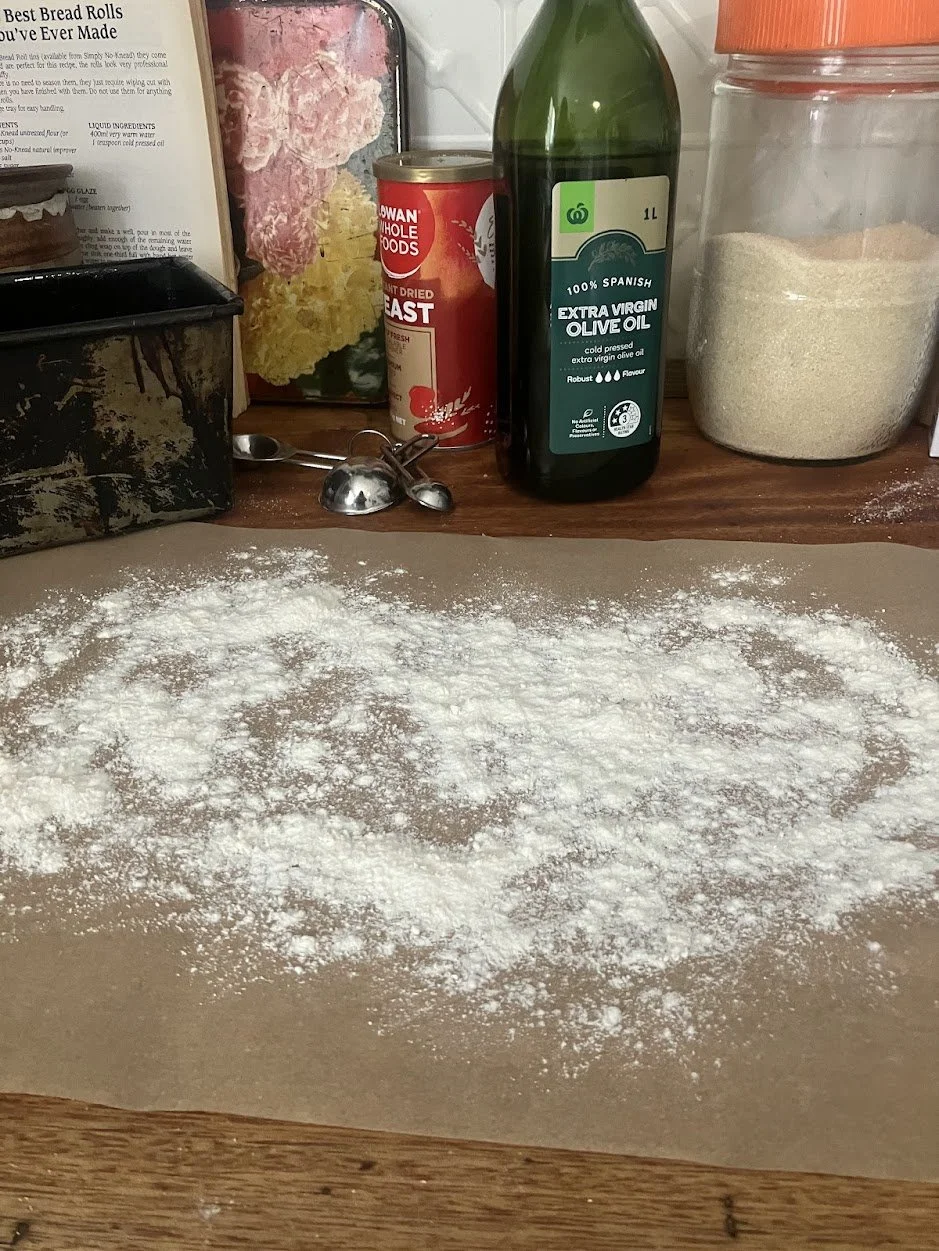
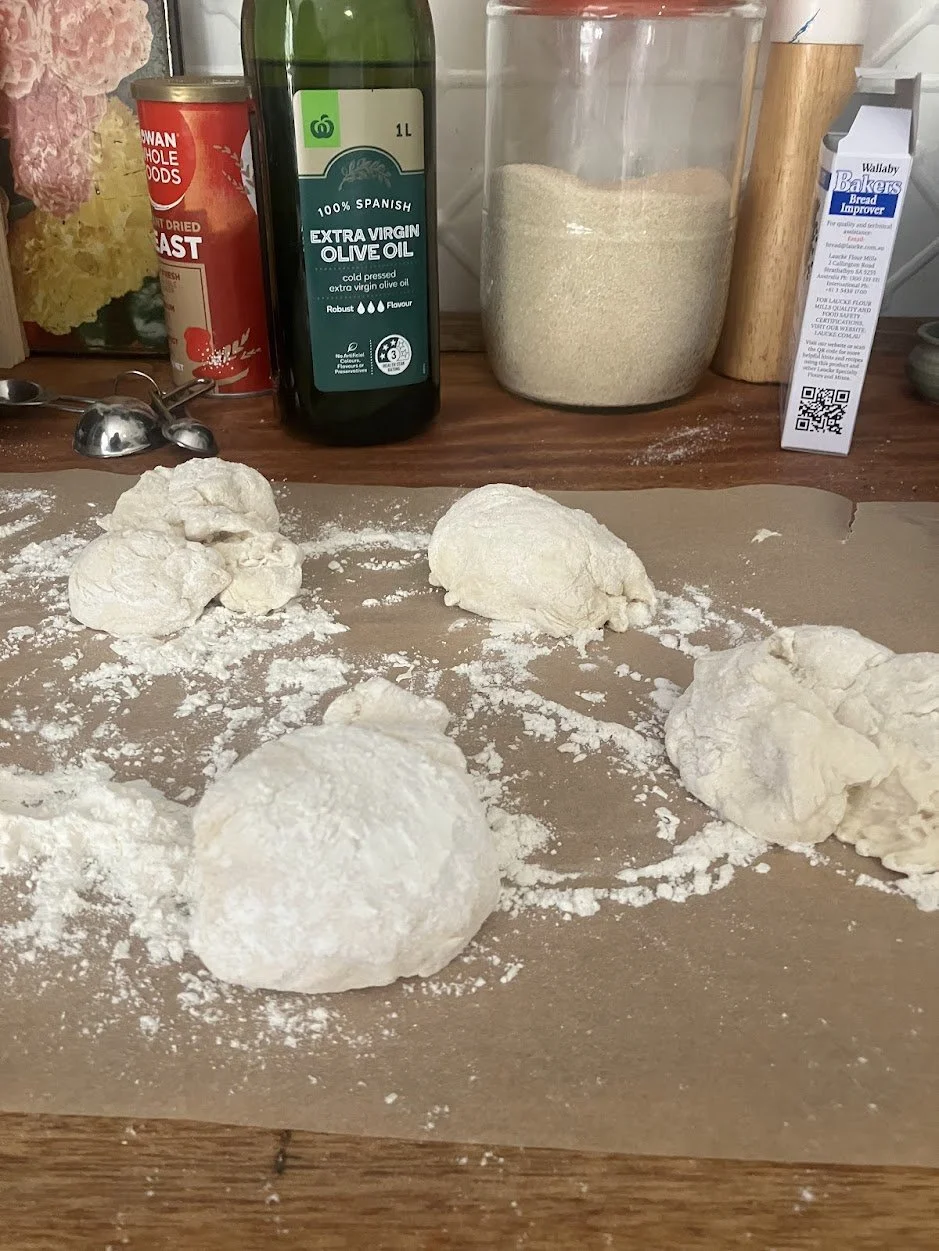
Come home, shape the dough (the part children often enjoy the most), leave it to rise.
Read some books, pop it in the oven.
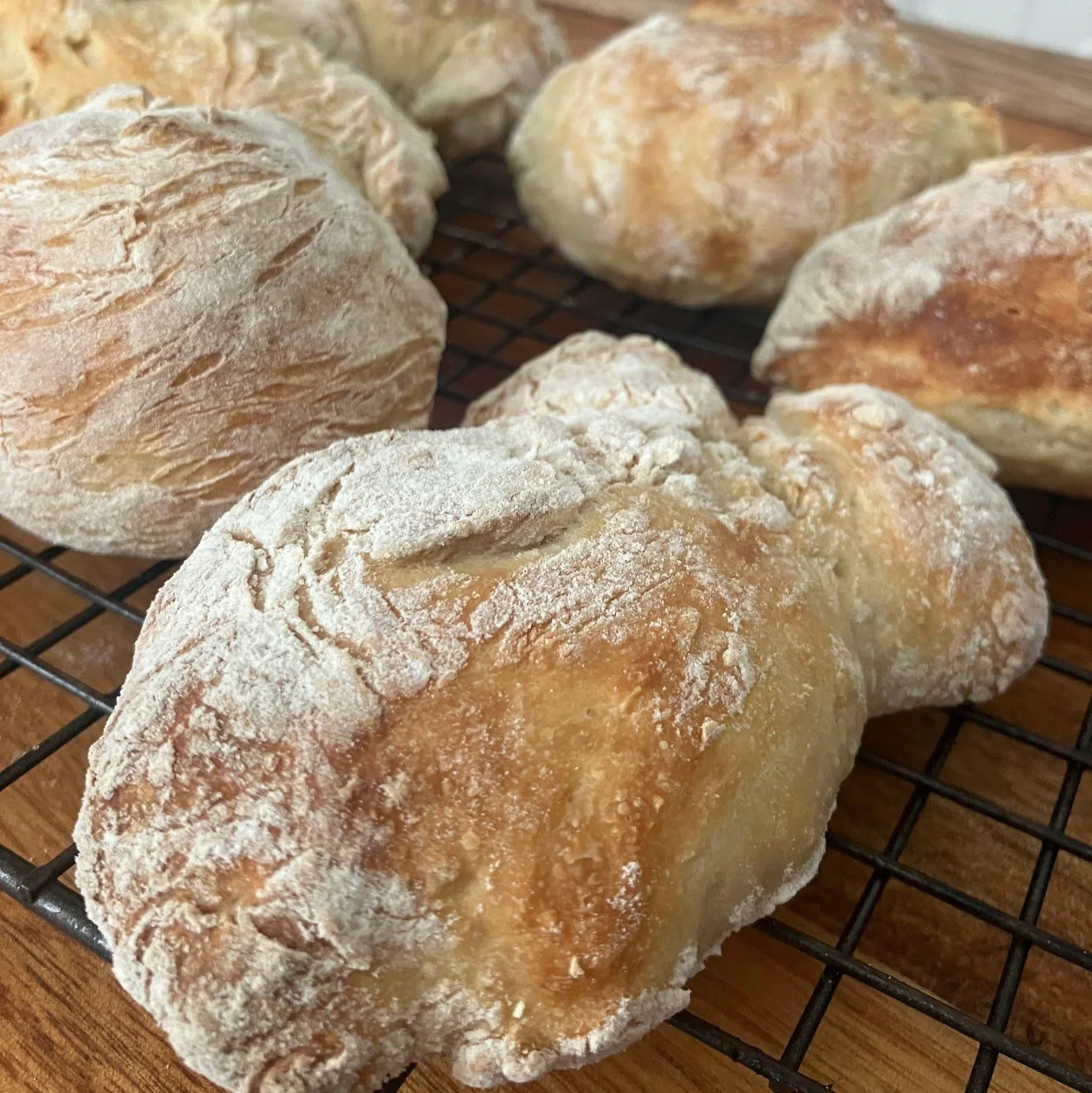
Do a few jobs, and it’s time for the best lunch of warm (strange-looking) rolls!
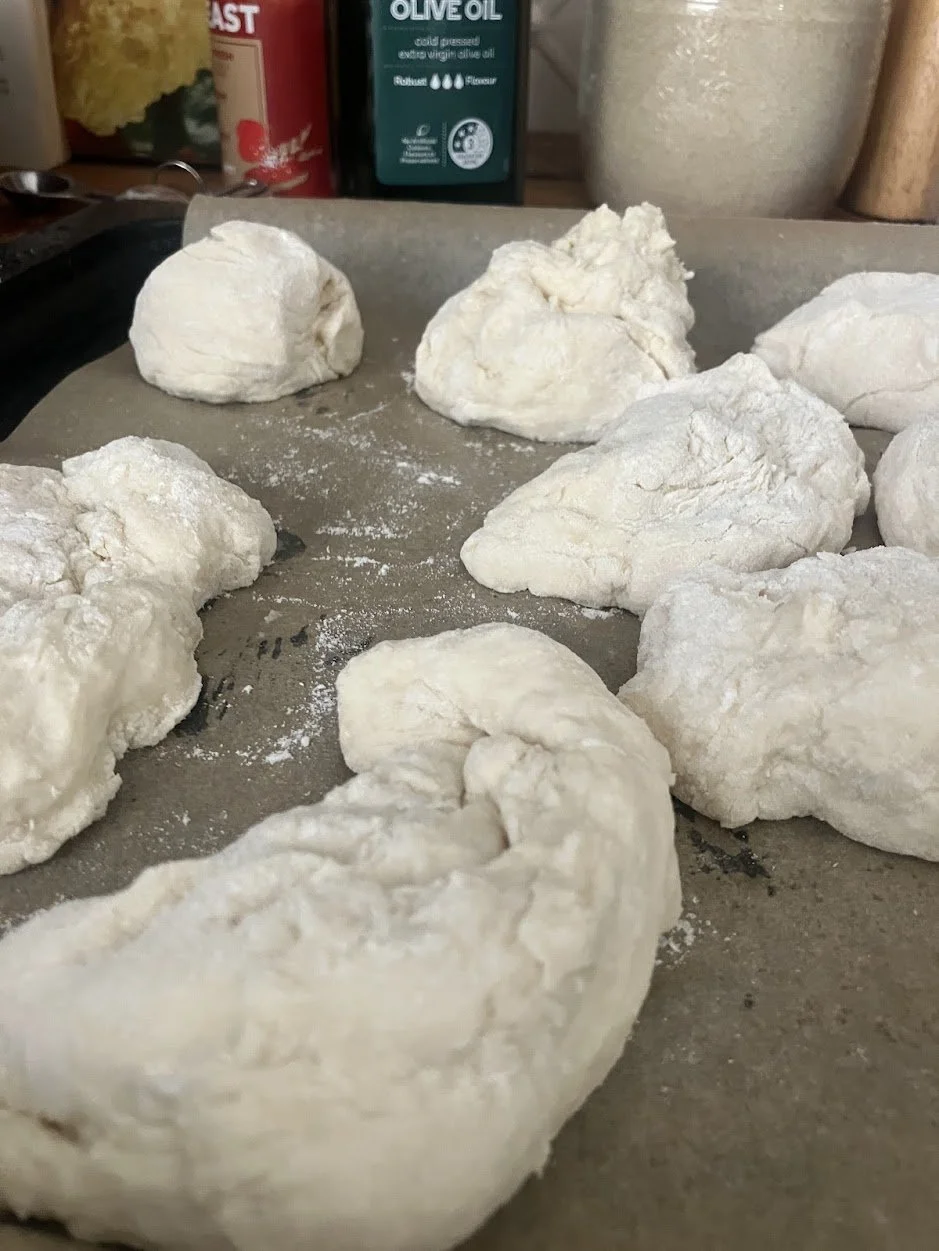
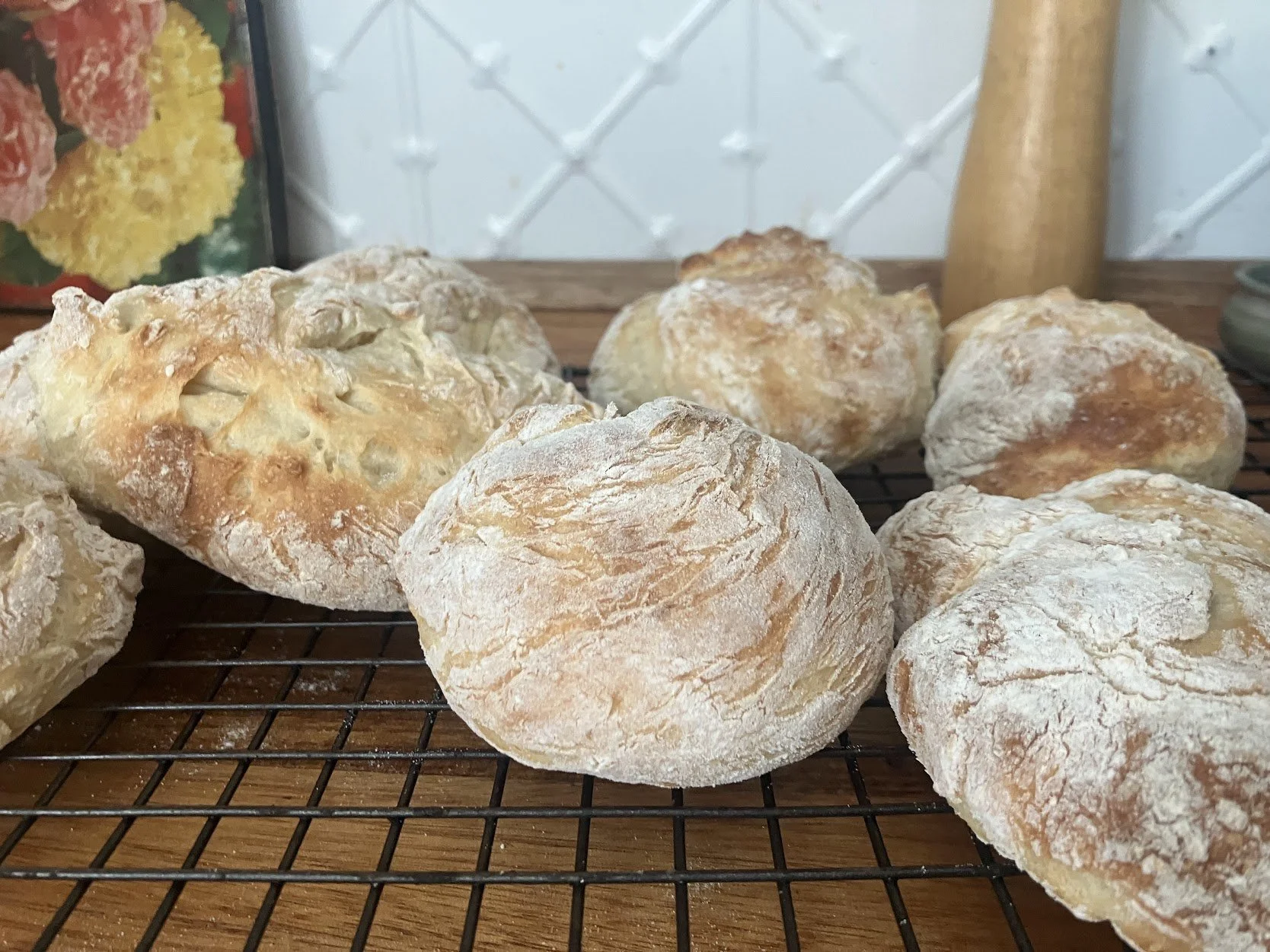
Enjoy.
A few other blog posts that you might like to read through
Thoughts on getting set up & safety in the kitchen
https://www.littlebluebirds.org.au/home/2022/7/27/kids-in-the-kitchen-part-one?rq=baking
Benefits of baking together
https://www.littlebluebirds.org.au/home/2019/9/5/baking-benefits?rq=baking
Something even easier - crackers
https://www.littlebluebirds.org.au/home/2024/10/7/extra-special-artisan-crackers?rq=baking
An amazing stew to cook with your bread
https://www.littlebluebirds.org.au/home/2017/5/18/warm-up-with-a-slow-cooked-meal?rq=bread