Helping your child with Emotions
Emotional literacy is being able to understand, label and recognise emotions that you are feeling as well as seeing them in other people. It can help you with regulating yourself, it can help with social development, building positive mental health and promote positive relationships.
Building emotional literacy takes time and having a childhood that contains moments of learning will help build this muscle.
One way we can build our emotional literacy is by learning to connect the feelings that happen in our body with the thoughts and emotions that are going on.
All of us can have a hard time connecting the feelings that take place in our body with our thoughts and emotions. Body mapping can be a good way to understand and build that skill.
The fun stuff! - some options
You can draw an outline of a body, talking about it a bit like a colouring-in sheet
You can draw an outline around your child’s body - and your own!
You can print out a simple outline for children to work with.
It can be great to work with your own outline alongside your child, providing them with your own examples to help them talk about theirs.
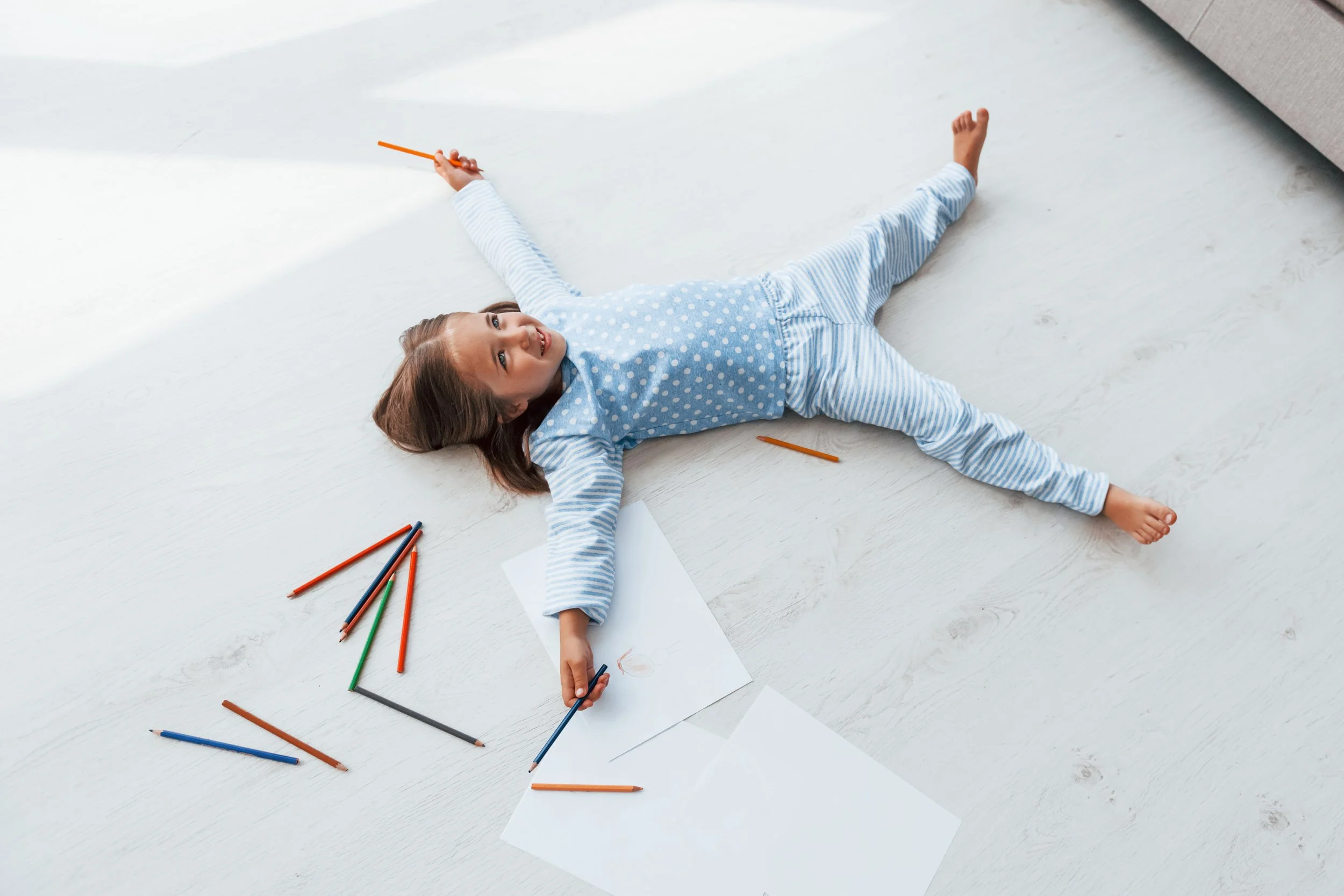
Here’s a link to a print out you can use
https://uk.pinterest.com/pin/free-human-body-printables-for-kids--9148005518537931
You probably have already had conversations with your child/ren about how our body can help us know what we are feeling. One way might be …. “Sometimes we are unsure about what we are feeling and our body gives us clues. The clues could be…”
Having butterflies in your stomach - could mean you are nervous.
Your chest feeling tight, and your breathing getting fast - could mean you are scared.
Your body wants to run and you feel light, with lots of energy - could mean you are excited.
You might feel like skipping and your face feels warm and wants to smile - this could mean you are feeling happy.
You might feel relaxed, warm and sleepy - this could mean you are feeling calm.
(these are all just suggestions - and you probably have others of your own to add in!)
Doing a body scan
You could scan your bodies with a conversation or meditation - that looks a bit like this, (you can adapt it to better suit the age of your child, or other adults in your house!)
“We’re going to sit or lie down somewhere comfortable. If you want you can close your eyes, take a few deep breaths, and start to think about your body. Start at the top of your head and imagine a light surrounding you and moving down your body. As the light moves down, notice what your body feels like.
How does your head and neck feel? Are there any spots that feel uncomfortable or different from usual?
Are your shoulders tight or relaxed? The light moves out to your fingertips - do you notice anything?
As the light moves down your body, how does your belly feel?
Do you notice anything in your legs, your knees, your feet?”
Looking at the body outlines you have, (either printouts, drawings or full body outlines) you can start to mark sensations. Using textas, pencils or paint, you can use different colours, shadings or symbols to mark things like…
tension
cold/heat
relaxation
discomfort
pain
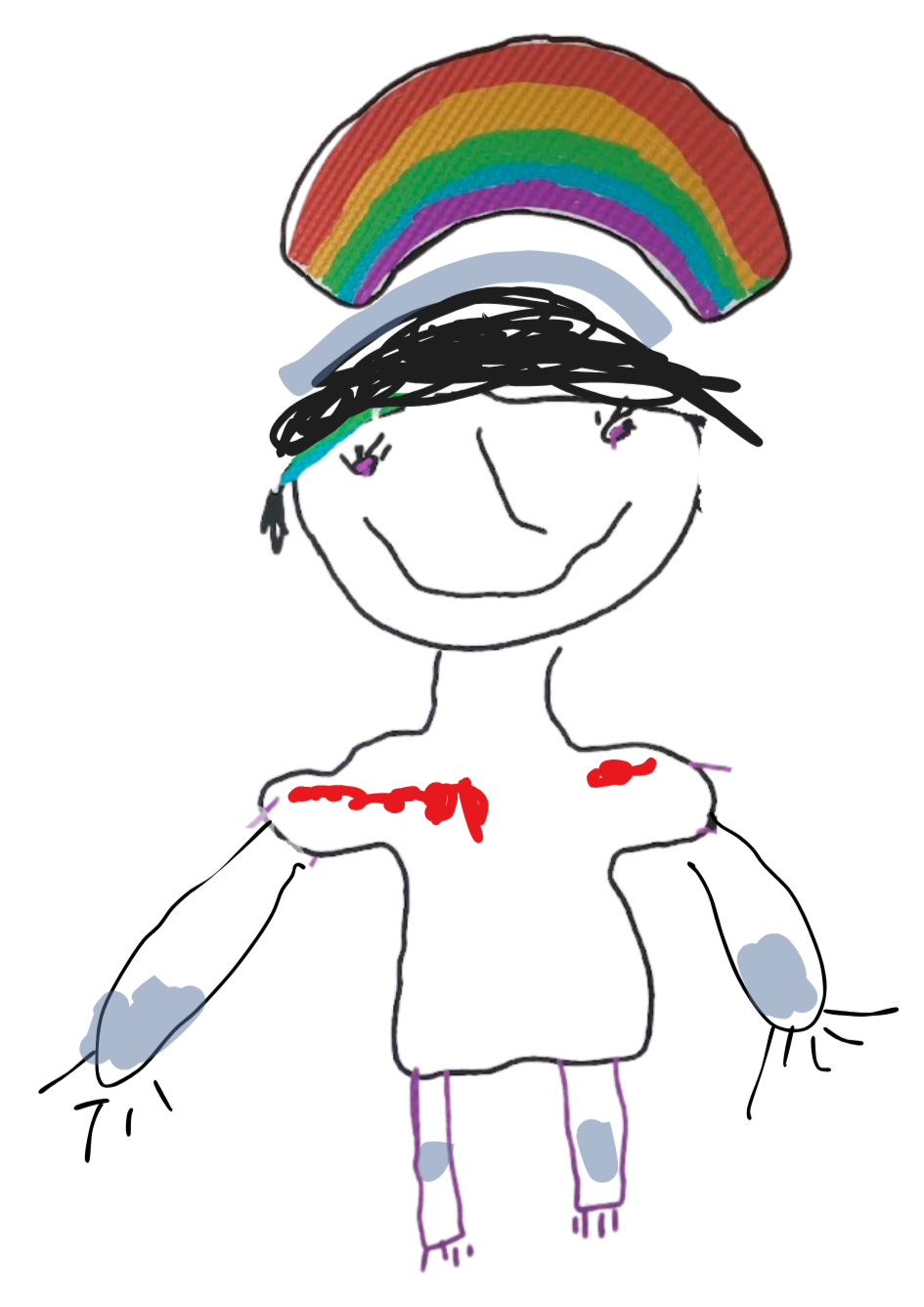
Identify Emotional Connections
You might like to talk with your child about some of the marks you’ve made in your own drawing and ask them about theirs.
Can you reflect on some of the emotions or memories that come up? Are there any feelings of happiness, anger, sadness or fear that are connected to the marks you have made?
Reflect and ask some questions
• “I wonder what this blue mark was about”
• “When did you/I first notice those red circle feelings?”
• “What are those little scratchy marks?”
• “How does your/my body feel when I think about this emotion or memory?”
Bringing it together as you start to build emotional language and connection.
After completing the body map, take time to reflect on your experience together.
Wow, that was interesting/fun/new. How was that? Are there any new ideas you have about how your body lets you know some of your feelings?
If this is something you enjoy or find useful - you can repeat body mapping regularly and you can look for patterns, develop new ways of talking about specific emotions and how they feel in the body at different times.
Finishing up
End with something like, “Thank you for sharing that with me. I liked doing that with you.”
This is one little tool that helps you develop not only your child’s emotional literacy, but also their relationship with you. It can become a safe space for them to learn to share feelings with you and where you have shared some of what is happening for yourself emotionally and physically. This can hold benefits for your long-term relationship with your child. It also holds benefits for your child understanding themselves as well as navigating social situations and relationships throughout their life.
Previous blog posts around similar themes
Extra resources
https://www.oxfordhealth.nhs.uk/children-and-young-people/wp-content/uploads/sites/4/2017/10/Primary-pack-15-Where-do-I-feel-emotions-in-my-body_.pdf
Additional body map outlines to print out
https://roelee.com/wp-content/uploads/2023/04/resource-2-worksheet-body-outline.pdf